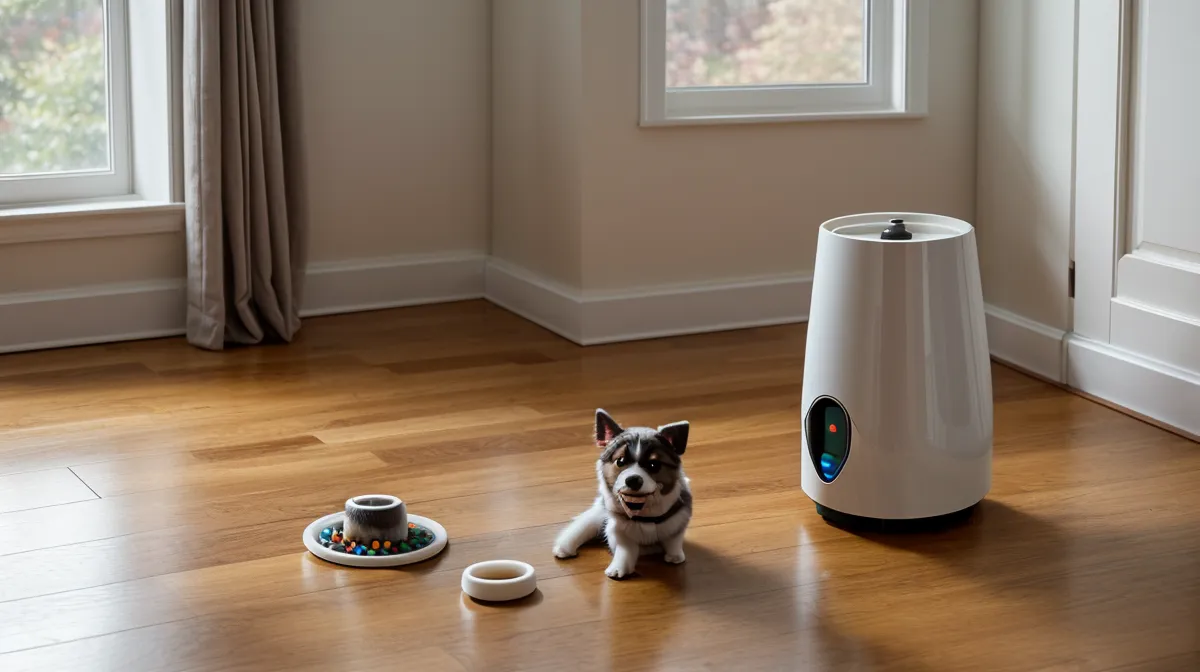
Probiotic powder doesn't always land in the bowl—some just disappears into the hopper. I didn't have a real answer until an auger jammed mid-cycle on me and I came around the corner to find Hopper parked in front of an empty dish, the feeder motor still whirring like it had somewhere to be. Feline nutrition and smart-feeder hacks don't usually share a sentence, but the second you try to dose a cat probiotic through a machine built for plain kibble, digestive health turns into a hardware problem.
Hopper's sensitive stomach is just part of daily life here, which is why automating the fix seemed like the obvious move. A four-liter hopper full of dry kibble was never designed to also carry a fine, moisture-hungry powder. The first few times I tried it, the auger either jammed outright or spun empty, leaving a crust of clumped powder sitting untouched at the bottom of the tank.
Getting Powder Into the Bowl
Some formulas name the exact bacterial strain on the label, things like Enterococcus faecium. Whether a particular strain is right for your cat's gut is a conversation for a vet, not a gear review, so that's as far as I'll go on the biology. What I can talk about is what happened to the powder once it started riding along with the kibble in my own feeder.
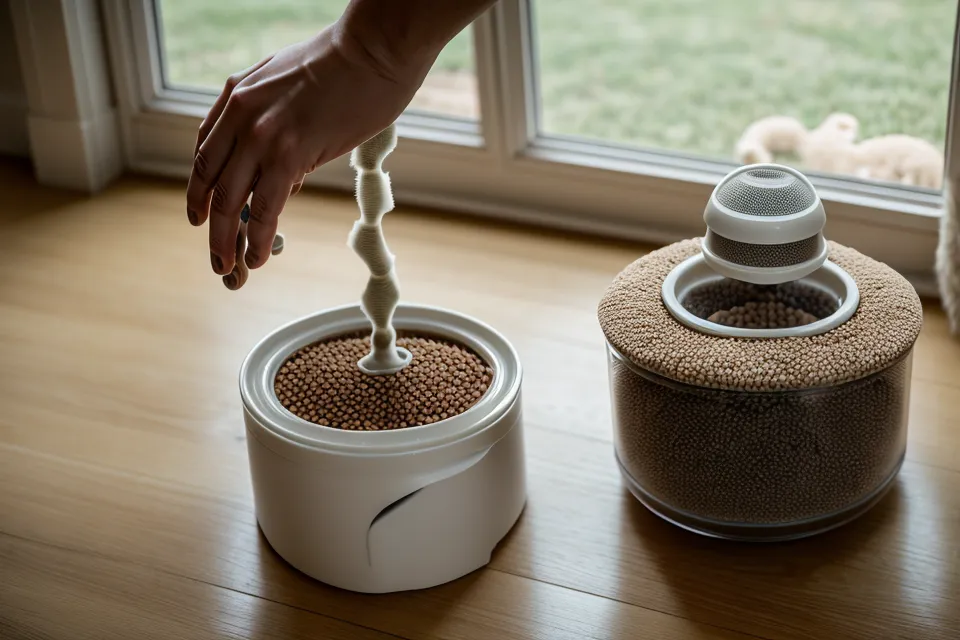
The first time it clumped, the little ring light on the feeder's hub had already shifted from its usual cheerful blue to a warning amber, sitting there mid-cycle like the machine was raising its hand to admit it couldn't finish the job. This particular mess happened while testing the Petlibro Granary, though I've seen the same thing happen on other auger-style units since. By the time I pulled the lid off, the powder and kibble oils had glued into something closer to wet sand than food.
Hopper Dosing vs. Hand Dosing for a Sensitive Stomach
So I started testing two approaches side by side instead of trusting the feeder to sort it out alone. Supplements mixed into a hopper pull moisture out of the air faster than the kibble carrying them ever does, which is the whole reason this comparison matters in the first place. The first approach was hopper dosing: mix the probiotic straight into the tank and let the auger portion it out with the kibble, same as always. The second was hand dosing: keep the powder out of the machine completely and add it to the bowl by hand right before Hopper eats.
Hopper dosing wins on convenience. Load the tank once and the feeding schedule already in place handles the rest, no extra steps during a long workday. But it only works if the powder stays coarse enough not to cake and the room stays reasonably dry, and neither of those is something you control from a desk during a client call. Hand dosing is the opposite trade: more reliable because nothing sits around getting sticky, but it means someone has to physically be there twice a day, which undercuts half the reason for owning an automatic feeder in the first place.
A friend of mine who does early-morning CrossFit at a box in Capitol Hill asked why I didn't just hand-dose it before leaving for the day. Fair question. Except a 5 a.m. wake-up before a workout leaves room for that kind of routine, and a full slate of early client calls doesn't, so hand dosing twice a day wasn't realistic here and the hopper had to be made to work instead.
The Auger Doesn't Care What It's Moving
None of this is a flaw specific to one brand. Any auger-style feeder pushes whatever's loaded into the tank toward the chute the same way every rotation, so it can't tell clumped powder from clean kibble until it's already stuck. That's the real argument against hopper dosing. It isn't the probiotic that's the problem, it's asking a machine built for uniform kibble to also handle something that behaves differently the moment the air gets humid.
Jamming mid-meal happens for plenty of reasons that have nothing to do with supplements, and that's its own troubleshooting list. So is what happens when a cat figures out how to muscle the lid open, or when you're running two cats on two different diets out of one machine, or when the wifi drops and you can't check the app to confirm a meal actually fired while you're muting a client call to swat cat hair off the laptop. Probiotics just happen to be the specific way I found the moisture problem; power loss and connection drops are separate fights, worth testing on their own terms.
The water side of digestive health is its own project, separate from anything the feeder handles. A wide ceramic bowl with a built-in reservoir was my first attempt at keeping Hopper hydrated between meals. Within three days of a Denver summer, the waterline had turned slick and cloudy, the kind of film that means bacteria beat you to it. That failure is what sent me looking into my own maintenance routine for hard water instead, a different fight from the one this article covers, but a related one. A sensitive stomach needs both ends managed, food and water.

Picking the Smart-Feeder Hack That Fits Your Schedule
Which approach wins depends on how much control you actually have over the room and the schedule. Mine came into focus on a Saturday spent hiking the amphitheater stairs at Red Rocks in Morrison, gone most of the day and nowhere near a kitchen. Nobody was coming home at midday to hand-dose a bowl, so hopper dosing had to be the answer, which meant solving the moisture problem instead of avoiding it: a coarser-textured formula, closer attention to humidity in the room where the tub gets stored, and wiping the chute weekly instead of waiting for a jam to announce itself.
If your schedule has you home for most feedings, or someone's around at midday, hand dosing is the safer default. Nothing sits in the hopper long enough to clump, and you get to watch the bowl empty with your own eyes instead of trusting a push notification. Choose hopper dosing when your hours make hand dosing impossible and you're willing to manage the powder's texture and the room's humidity. Choose hand dosing when your schedule genuinely allows it, because it's the harder-to-mess-up option every time.
None of this matters if the underlying feeding schedule isn't accurate to begin with. I've written separately about the automatic feeding schedule for long workdays, and getting portion sizes dialed in there is the foundation everything else sits on. Wet food brings a spoilage clock that a dry hopper never has to deal with, a separate setup problem from this one. Get the dry-food dosing method right, hopper or hand, and a sensitive stomach stops being a surprise waiting to happen on the rug.