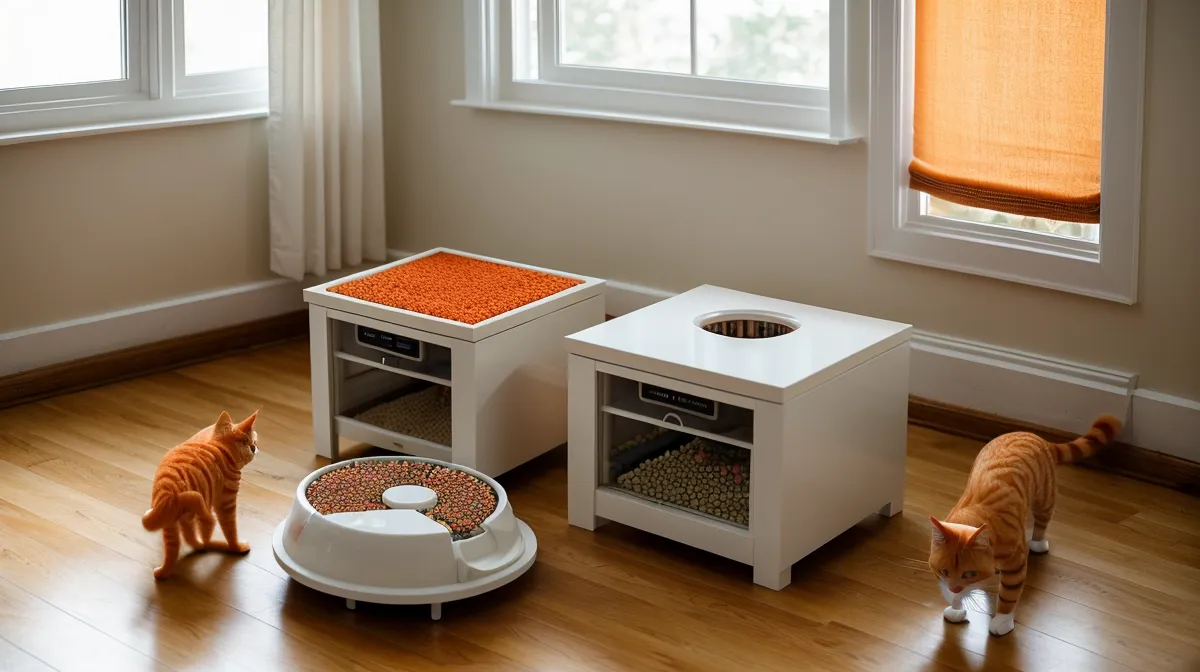
Late one afternoon during a marathon client Zoom call, I heard the telltale hiss and scramble of Beans bullying Hopper away from the kibble again. It was a sound I’d grown to loathe. In a one-bedroom rental in suburban Denver, there’s nowhere for that sound to hide. It bounces off the hardwood and settles right in the middle of your work-from-headspace. Hopper, my 9-year-old tabby, is a gentleman who believes in pacing himself. Beans, a 4-year-old ragdoll mix, is essentially a vacuum cleaner with fur. He views any unattended bowl as a personal invitation to expand his waistline at Hopper’s expense.
As a designer, I have a low tolerance for clutter and a high bar for things working the way they’re supposed to. But the 'free-feeding' experiment was a total disaster. Beans was ballooning toward a weight my vet was starting to use 'polite concern' about, while Hopper was looking a little too lean for a senior cat. I was essentially running a kitchen where one chef was a Michelin-star perfectionist and the other was a golden retriever in a cat suit. I spent my days policing bowls like a high-school hall monitor instead of finishing my wireframes. I knew I needed a tech pivot, but I’ve been burned by 'smart' gear before. I wasn’t looking for a gimmick; I was looking for a gatekeeper.
The 134.2 kHz Solution: Moving to Microchips
The solution seemed to be dual microchip-activated feeders. The premise is simple: the feeder stays locked under a plastic hood until the correct cat approaches. It uses an RFID reader to scan for the 12mm microchip already embedded under the cat’s skin. For the gear-heads, these things usually operate on the standard 134.2 kHz frequency, which is the international norm for pet implants. If the signal matches the ID you programmed, the lid slides open. If it doesn't, the lid stays shut, and the thief is left staring at a piece of plastic.
I started this experiment during a snowy week in March. I figured if we were all going to be trapped inside by a Denver blizzard anyway, I might as well spend it watching cats interact with robots. Setting it up felt a lot like installing a new smart thermostat—lots of blinking lights and a 2.4 GHz Wi-Fi requirement. Most of these pet appliances stick to the 2.4 GHz band because it penetrates apartment walls and furniture much better than the faster 5 GHz stuff. Since my router lives in the living room and the feeders are in the kitchen, that signal strength actually matters. You don't want a 'server timed out' error to be the reason your cat goes hungry.
The Training Phase: Whirr-Clicks and Sprinting
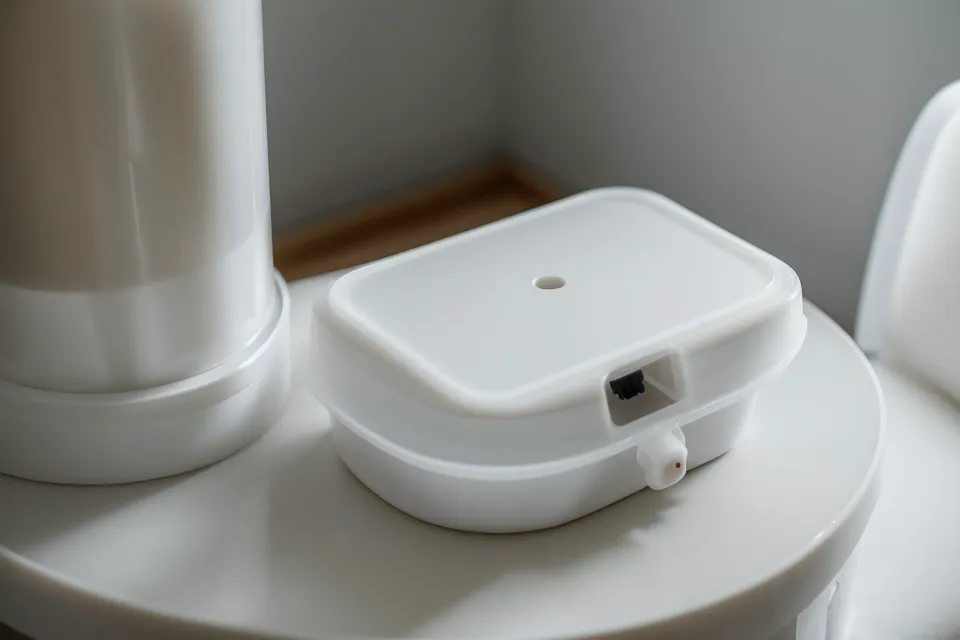
You don't just drop a microchip feeder on the floor and walk away. That’s a recipe for a very hungry, very confused cat. After about three weeks of training, I finally saw the light. The training mode on these devices is basically a slow-motion version of the final act. It leaves the lid open a crack, then moves it a little more each day so the cats get used to the mechanical noise.
There is a specific mechanical 'whirr-click' of the feeder lid that sends Beans into a full-speed living room sprint, only to be stopped by a closed plastic door. It’s a sound that now defines my afternoons. Hopper eventually learned that the noise meant his 'private dining room' was open. But training a 9-year-old cat to trust a moving plastic lid is like trying to convince your grandmother to use a self-checkout lane—it takes patience and a lot of standing around looking encouraging.
I learned quickly that the late-shift peace of mind I was chasing depended entirely on how well I watched their behavior during those first few weeks. If I’d just left them to it, Hopper probably would have decided the 'scary clicking box' wasn't worth the effort and just given up on eating entirely. You have to be there to bridge the gap between the gadget and the animal.
The 'Ragdoll Fur' Failure and Other Tech Gaps
About a month into the setup, I hit my first major failure. I came home from a grocery run to find Hopper's feeder completely empty, but he was acting like he’d been fasted for a medical procedure. I checked the app. It said he’d eaten. I checked the bowl. It was bone dry. It turned out the infrared sensor that detects when a cat has walked away—telling the lid to close—was blocked by a stray tuft of ragdoll fur that Beans had left behind during a 'drive-by' sniffing session.
Because the sensor was 'blocked,' the feeder thought Hopper was still standing there, so it kept the lid wide open. Beans, being the opportunistic vacuum he is, simply walked up and finished the job. This is the reality of pet tech: it’s only as smart as the cleanest sensor. I realized then that my job as a designer/owner wasn't over; I just moved from 'hall monitor' to 'maintenance crew.' I now keep a pack of microfiber cloths by the feeders to wipe the sensors every couple of days. It’s like cleaning the lint trap in your dryer—skip it, and the whole system starts to fail.
The Piggybacking Problem and the Plexiglass Fix
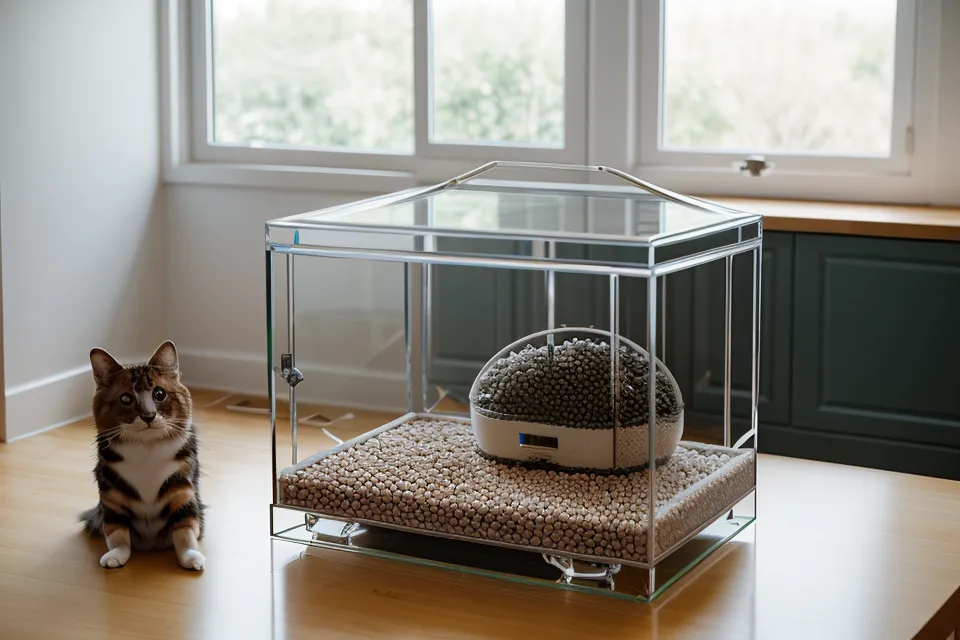
By early June, Beans had evolved. He’s a smart cat, and he figured out 'piggybacking.' He realized that if he stood right behind Hopper, or shoved his head in from the side the second the lid opened, he could bypass the RFID lock entirely. The feeder was doing its job—it recognized the 134.2 kHz chip in Hopper’s neck—but it couldn't stop a second head from entering the 'feeding zone.'
I had to get creative. This is where the RFID shield strategy came into play. I ended up building a custom plexiglass shield that wrapped around the back and sides of the feeder. It essentially forced the cats into a 'single-file' entry. If you’re not coming in through the front hoop, you’re not getting to the kibble. It’s not the most aesthetic thing I’ve ever designed, but in a one-bedroom rental, utility beats beauty every single time. It finally turned the feeder into the fortress I needed it to be.
Why Automation Isn't a Replacement for Observation
Here is the part where I might lose some tech enthusiasts: these feeders can actually make you a worse pet parent if you aren't careful. Cats are crepuscular, meaning they are most active and hungry at dawn and dusk. In the old days, I was the one putting the bowl down, which meant I saw exactly how much they ate and how fast they moved. When you automate that, you lose that daily 'health check.'
I noticed this one Tuesday afternoon last month when Hopper seemed a little sluggish. If I hadn't looked at the app logs to see that he’d only triggered his feeder twice that day instead of his usual five small snacks, I might have missed that he was feeling under the weather. Automated gear often disrupts the essential human-pet bonding ritual of feeding, which is critical for reinforcing behavioral training and monitoring early signs of illness. You can't just set it and forget it. You have to use the data the gear gives you to replace the eyes-on time you're losing.
Look, the stress of the 'open bowl' chaos is gone. I don't have to jump off Zoom calls to save Hopper's dinner anymore. But I still make a point to be in the room for at least one of their 'main' drops. It’s about balance. The tech handles the policing, but I still handle the parenting. If you're struggling with a similar multi-cat heist, you might find that when late-night client deadlines meet hungry cats, having a system that recognizes each cat individually is the only way to keep the peace—and the weight—where it belongs.