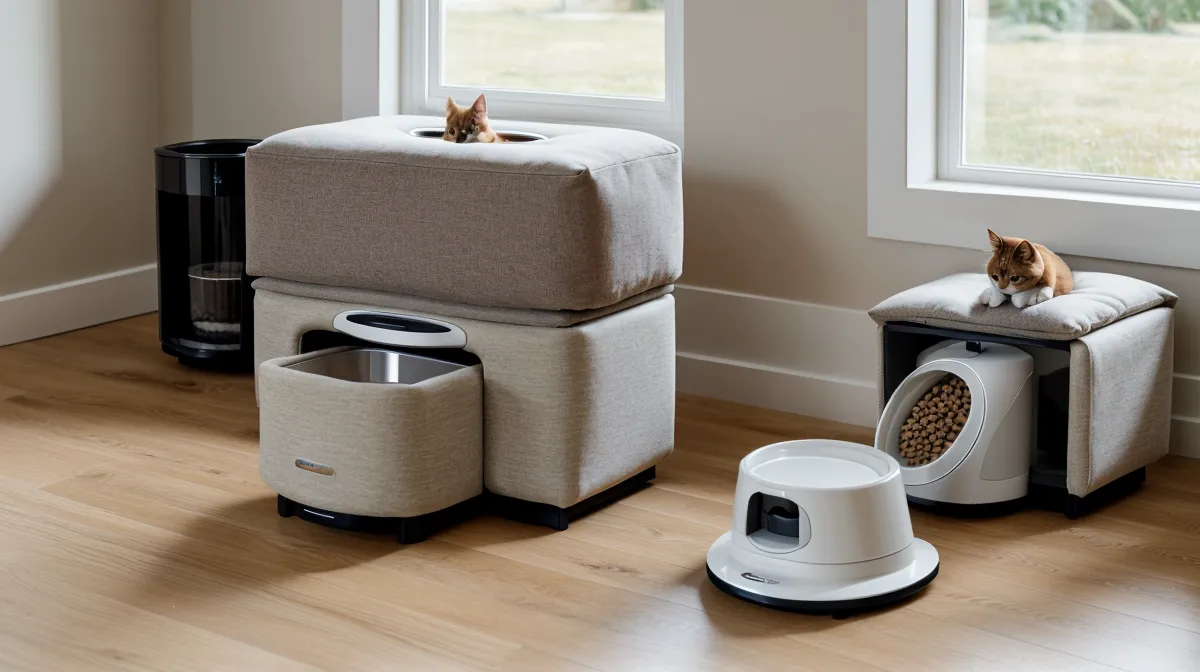
Four portions in one sitting is not a normal morning for a cat who usually eats like she's rationing. Beans went through all of it before I'd even reached for coffee, because the lid on the feeder we were using at the time never clicked back into place the night before, and an unlatched lid to a food-motivated ragdoll mix might as well be an open pantry door. Nobody got hurt. But it's the kind of morning that turns a casual cat-tech shopper into someone who checks automated feeding specs the way other people check restaurant reviews before smart pet gear ever earns a spot on the counter.
Quick disclosure since money's about to enter this story: some of the pet brands mentioned here pay a commission when a link gets clicked and something gets bought, and that includes every product named below. Your price doesn't change either way. Everything gets purchased out of pocket first, used in this apartment for weeks, and either earns a spot on the shelf or gets returned — no press samples, no company mailing me a free unit hoping for a nice write-up.
Look, I get paid to notice failure points for a living, and that habit doesn't switch off at home. A feeder jamming isn't a tech glitch to me; it's the pet-gear equivalent of a dishwasher backing up onto the floor mid-cycle, something built to run unattended that quietly stopped being unattended. The gear that got tossed before any of what's below earned counter space was a wide ceramic bowl with a built-in water reservoir, the kind marketed as low-maintenance — it went slimy at the waterline by the third day of a Denver summer, and no amount of rinsing fixed that design. Denver's hard water didn't do it any favors either, though filter life on a proper fountain is a maintenance question deep enough for its own piece. Bells and whistles rarely predict which unit survives a real long day away; the boring stuff does, like whether the schedule lives on the device itself or only in someone else's cloud. The early misfires that got me to this point are logged in Beyond the Reset Button: What I Learned Stress-Testing My First Automatic Feeders, for anyone who wants the ugly first drafts.
Automated Feeding, Compared: Cloud Control Versus Local Logic
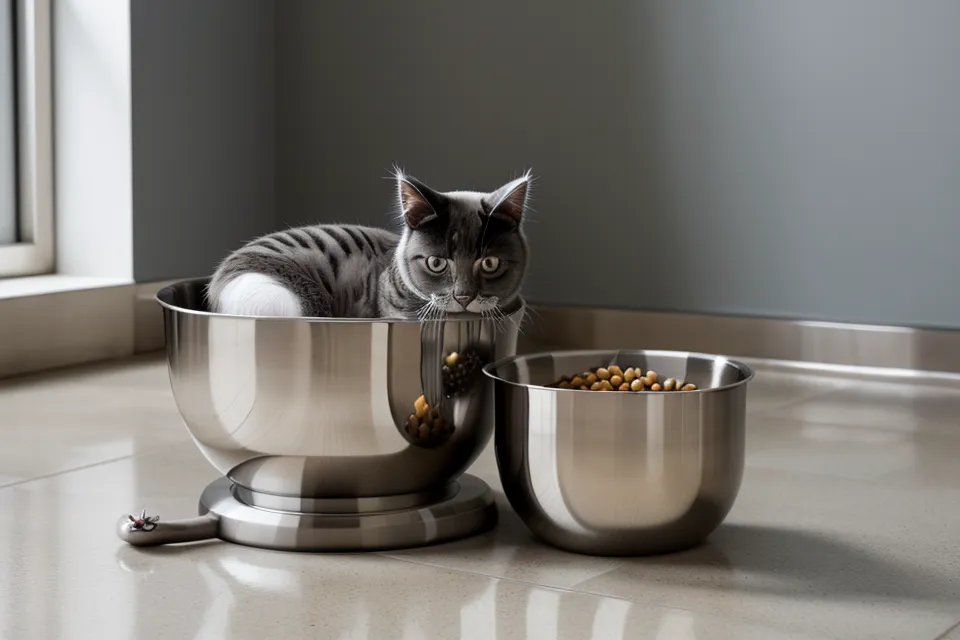
Here's the split that matters more than any spec sheet: most "smart" feeders lean entirely on the cloud, and if your internet blinks, the unit forgets who it is. Petkit and Petlibro sat side by side on the counter for this test, both dropping the same portion sizes at the same times, and the difference showed up the moment the router hiccuped. Petlibro wants a steady 2.4GHz Wi-Fi signal and gets sulky if the router sits more than two walls away — and that's a detail worth checking before you buy, not something to troubleshoot after the unit's already stuck rebooting behind a dead signal. Portion accuracy itself was close enough, gram for gram, that I wouldn't crown a winner on that measure alone.
Petkit handled that same power flicker without blinking, because it keeps a battery backup running the internal clock even while the Wi-Fi is down. Exactly how long that backup holds through a longer outage is its own stress test I've written up separately, so I won't relitigate it here. The bowl is stainless steel too, which matters if your cat's ever had chin acne from a plastic bowl holding grease in its scratches — this one rinses like a dinner plate instead. Neither cat has figured out how to pry a lid open, though that's a separate arms race I've documented elsewhere, and keeping the hopper dry enough that kibble doesn't go stale through Denver's swings between humid and bone-dry is a maintenance chore of its own that deserves more than a passing mention here.
But if budget's the deciding factor, Petlibro is the one I'd point a broke friend toward — a real price gap, and in my testing just as accurate on portions as the pricier unit. The notifications do lag, sometimes arriving a good half hour behind the actual drop, which matters if you're the type who checks the app compulsively during a long meeting. Neither of these two units does microchip-based separation for a multi-cat household eating different diets, either, which is a bigger gap than most reviews admit and probably deserves its own comparison someday.
Wet food sitting in either hopper past a few hours in a warm apartment is asking for trouble, a whole separate topic I won't cram in here. What I will say: running a manual jam test on both units, at an hour that should not require anyone to be listening for it, only one of them gave that clean double-click of the dispensing wheel locking into the next notch every single time before a portion dropped — why a wheel skips that notch on the other unit is a deeper mechanical rabbit hole than this piece has room for. For the full spec-by-spec rundown, there's Automatic Pet Feeder Comparison: Capacity, Power Backup, App by Model.
Does Remote Health Tracking Beat Old-School Reliability?
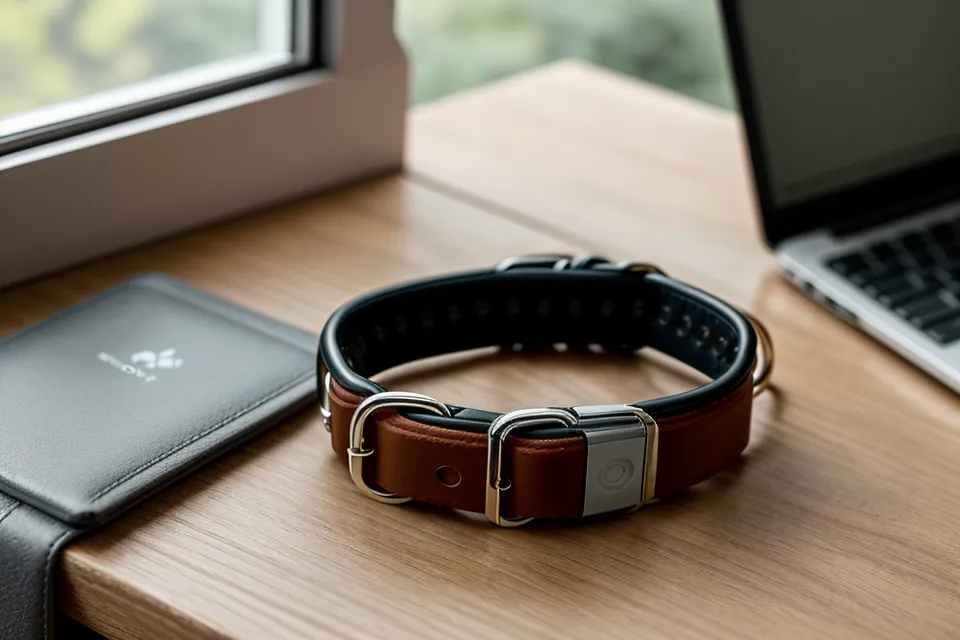
Reliability isn't only about meals, either. Maven Pet's AI tracker rides on Beans's collar, and ragdolls are lazy enough by nature that a real drop in activity is easy to miss — the app caught it first, flagging that she'd stopped making her usual afternoon jump onto the windowsill days before I noticed anything different in person. A vet visit confirmed something minor, caught early because of that flag. The battery on the tag lasts the full stretch advertised too, which still surprises me given how often "smart" turns out to mean charging overnight, every night.
There's the trade a lot of buyers don't think through until it bites them: cloud-dependent gear hands you real remote control — I can fire off a snack for Hopper from a coffee shop across town — but that convenience is borrowed against the day the company's servers go down, at which point the smart house gets dumb fast. An app telling you a meal dropped isn't the same as confirming it dropped; that gap between reported and verified is the actual design principle worth shopping for, more than any single spec, and it's why a camera pointed at the bowl earns its keep in ways a push notification alone never will. Whether a feeder can still dispense on schedule with zero internet and zero app open at all is a different question than whether it merely remembers the correct time, and it's the one I lean on most when a unit like Petkit stores its schedule on the hardware itself instead of only in the cloud.
Weighing a Foam Bed Against a Backup Supplier
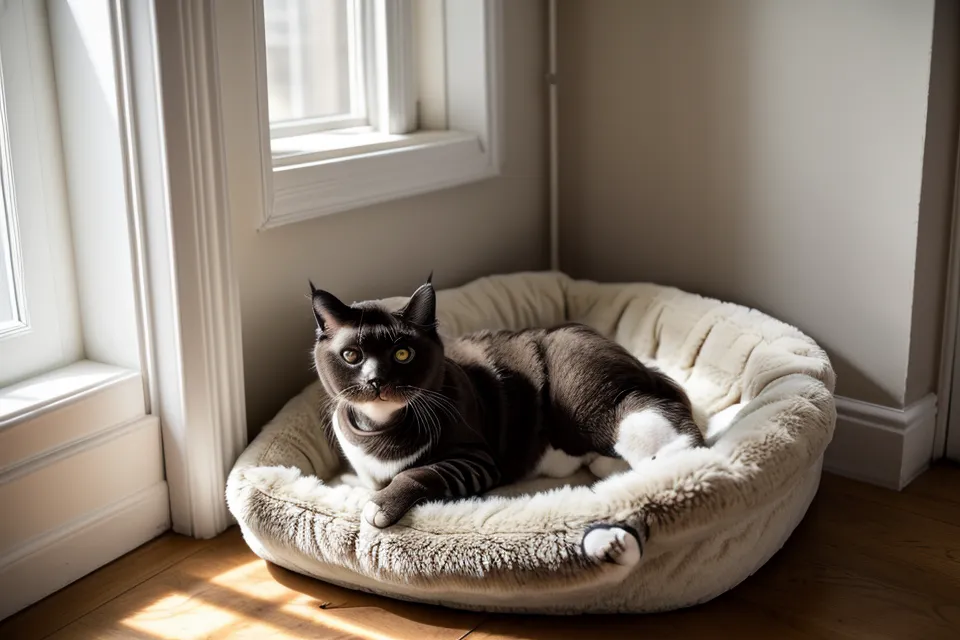
Not everything in this apartment is app-connected, and the bed question turned into its own little face-off. Most budget beds are polyester fluff that goes flat within weeks of a cat kneading the same corner every night; the FunnyFuzzy orthopedic pad is still holding its shape well past the four-month mark, which is the benchmark I actually trust over a manufacturer's claim.
One catch worth knowing before you order: these ship from international warehouses, so budget seven to ten days rather than expecting it Tuesday because your cat just ruined the old one. I went deeper on how it held up in my FunnyFuzzy Calming Bed review. For the unglamorous stuff — grooming supplies, dental kits, the boring restock items — I switched to Revival Animal Health a while back. Their website looks frozen sometime around 2005, but a human answers the phone, and that beats any chatbot I've argued with this year.
So here's where the trade-offs land, without hedging: pick Petkit if your power or Wi-Fi drops more than once a season and you want a schedule that survives the outage; pick Petlibro if the price gap matters more than a thirty-minute notification lag and your router already sits close to the feeder. Pick the AI tracker if you want early warning on a health change and don't mind a subscription running in the background; skip it if you'd rather spend that money solving an actual feeding problem first. As for the bed, get the orthopedic pad if your cat kneads before sleep and has already destroyed two cheap ones; skip it if your cat has never nested a day in its life. None of this fixes every long evening away. It just means the next time a meeting runs late, the only thing waiting at home is two cats who already ate.