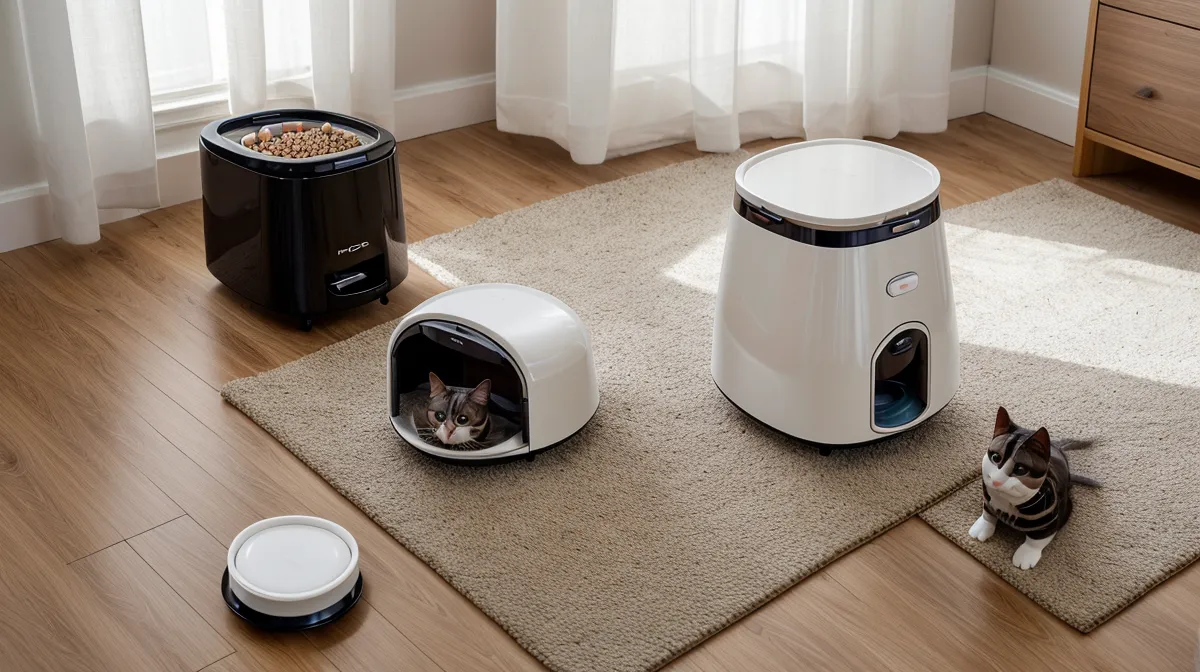
Three percent. That's what the battery icon on my phone showed when the feeder app finally pushed its low-power warning, with the next scheduled meal still two hours out. I was mid client call, laptop propped on a stool at a table in Denver Central Market in RiNo, and I did the math twice before I got what was actually at stake: not a missed meal exactly, but Beans hitting an empty hopper at full speed instead of the slow, paced drops he's used to. That's the actual case for automatic cat feeders built for cats who eat too fast: slow feeding isn't about the bowl geometry doing the heavy lifting so much as the machine holding its schedule when nothing else in the apartment is.
Quick disclosure, since we're already talking gear: some of the pet brands mentioned here pay a small commission when a link turns into a purchase, at no extra cost to you. I buy every piece of pet tech with money from my own freelance invoices, run it in this one-bedroom apartment for weeks, and only keep recommending what survives Hopper and Beans actually using it. Gear that jams, drops connection, or gets tossed within a month doesn't make the cut, no matter what the brand pays.
Before any of the tech, I tried the analog fix: a neighbor who agreed to swing by at lunch and portion out food by hand. It worked, genuinely, for about two weeks, with no missed meals and no drama. Then she took a job that moved her to Phoenix, and I was back to hoping a jammed dispenser wouldn't ruin another rug.
What's Actually Happening When a Cat Scarfs and Barfs, and Why Slow Feeding Helps
When a cat eats too fast, air goes down with the food and has to come back up somehow. That's regurgitation, technically different from vomiting, though your rug won't know the difference at 2 a.m. A bowl with raised bumps helps some cats, but for a fast eater sharing an apartment with someone who works long client hours, the fix that actually holds is pacing: a feeder that drops food in small pulses instead of one pile. Fifteen to twenty minutes for a full portion is the number I look for now. Faster than that and it's just a fancy bucket with a timer.
Beans is the test case for all of this. He's a four-year-old ragdoll mix, and left to his own devices he clears a standard quarter-cup portion in under ninety seconds if the tray opens all the way. That's the baseline I measure every slow-feed mechanism against now. Slow the tray down and he can't get near that pace. And the same bowl geometry that paces him out also happens to make tipping or paw-raking the tray basically pointless, which is a separate kind of security most people don't think about until a cat figures out how to hustle an early meal.
The Petkit Earned Its Spot on My Counter
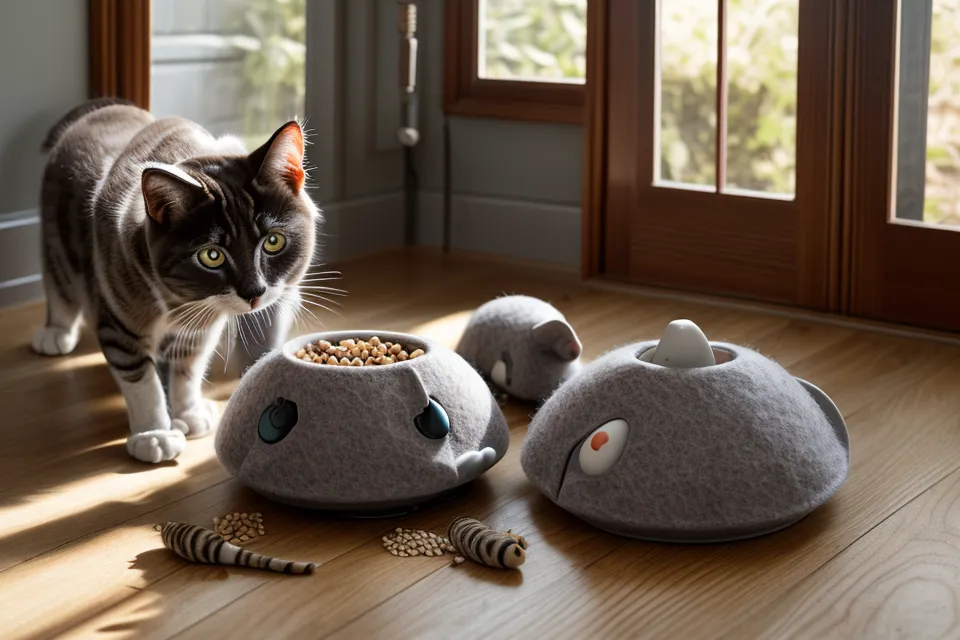
By week four of running it full-time, the pattern showed up in the logs on its own: no missed pushes, no jammed chute, the bowl rinsed clean every time. The Petkit is the feeder I still leave running through a client meeting that bleeds into the evening, and in months of logs it hasn't missed a single push notification. When you're stuck in a mockup review, that alert is the only way to know the cats actually got fed on schedule.
That three-percent battery scare, it turned out, ended fine. The Petkit's backup cell held the schedule for the rest of that call, which is exactly why I trust it through Denver's sudden spring storms that knock the power out just long enough to reset a microwave clock. Staying alive through a power blip is a different problem than staying functional with zero internet at all, and that second question is its own reliability deep dive I'm saving for another piece. It also runs a stainless bowl instead of plastic, which matters more than it sounds: plastic traps grease down in the seams and that's a straight line to feline chin acne, while stainless rinses the way a good cast iron pan does, quick and actually clean after.
Setup isn't painless. The app assumes you already know the difference between your 2.4GHz and 5GHz Wi-Fi bands, and mine refused to connect until I split them out manually. That was a frustrating morning I don't want back. Wi-Fi has honestly been the flakiest part of testing feeders in general, and it deserves its own dedicated stress test rather than a paragraph buried in here. Once the Petkit actually connects, though, it stays connected. I haven't had to re-pair it since.
Look, my friend Deena Portsmith thinks I've lost the plot a little over all this. She's got two school-age kids and a goldfish, zero cats between them, and she still gets texts from me about notification lag times. Fair, honestly.
A neighbor two floors up, Caulfield Rios, spotted the camera suction-cupped to my window and knocked on my door asking about it. He works restaurant nights and needed something that could handle a feeding window as irregular as 5 a.m. some days and closer to dinnertime on others, so I lent him a spare feeder for what was supposed to be a long weekend test. He kept it running well past that, which told me more about handling a genuinely erratic schedule than my own fairly predictable one ever could. Whether a camera can actually confirm food hit the bowl, versus just confirming a motor spun, is a separate verification question I'll tackle properly somewhere else.
Petlibro: Almost as Good, Way Less Money
If the Petkit's price tag feels steep just for a feeder, the Petlibro is the one I point people toward instead. It costs meaningfully less, and in my own testing the portion sizes have come out just as consistent. Beans gets the same slow pulse of kibble every time, not a jackpot on day three and a trickle on day five.
The 'Slow Feed' mode is what actually stops the barfing. Instead of one big drop, it releases kibble in small increments, more tasting menu than buffet, and Beans stopped pacing the kitchen floor once he figured out the food kept arriving in waves instead of all at once. He can't inhale what isn't fully there yet.
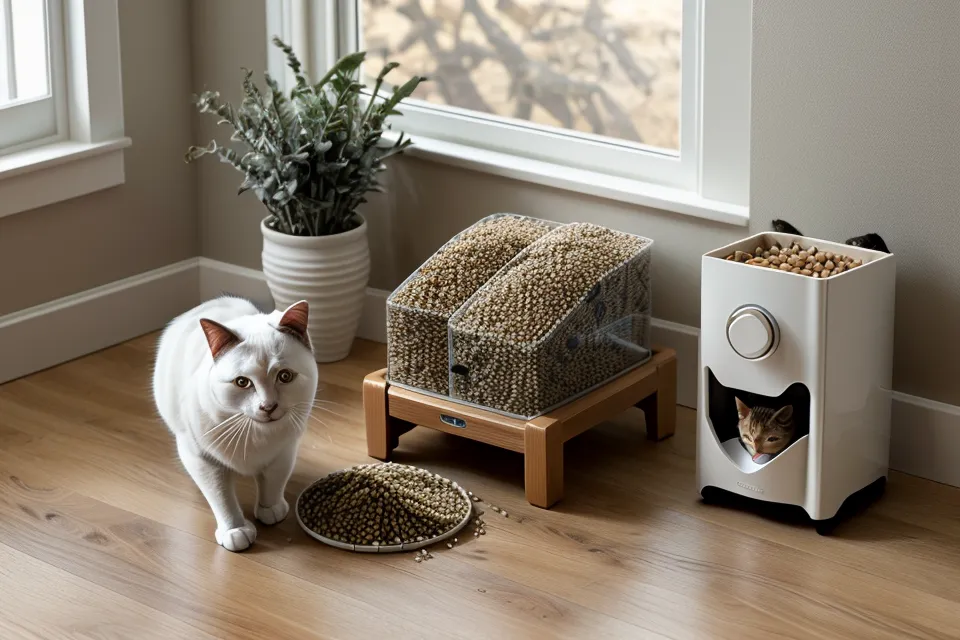
One real complaint: notifications run slow on this one. My testing logs show a lag of thirty to sixty minutes between the food actually dropping and my phone buzzing about it, which will drive a check-the-app-constantly type of person a little nuts. Jamming mid-meal is a separate headache entirely, Different kibble shapes and different chute widths change the failure point every time. For the price, though, the Petlibro is still a solid, reliable machine, and their fountains earned a permanent spot in this kitchen too, which I got into separately in Best Stainless Steel Cat Water Fountain for Small Apartment Kitchens.
Does Denver's Dry Air Ruin Your Kibble?
Dry air at altitude turns kibble stale fast if the lid's desiccant pack goes too long between swaps. How often and why is a deeper topic than fits here, so I'll just say I restock desiccant and filter supplies in bulk from Revival Animal Health, since they carry the odd niche items big-box stores skip.
The water side is a similar story. Denver's hard water shortens filter life faster than most people expect, and I broke that whole mechanism down separately in Denver Hard Water vs. Smart Fountains rather than repeating it here.
Tracking Hopper's Numbers With Maven Pet
For Hopper, who's closing in on double digits now, I've gotten more careful about tracking health rather than just feeding schedules. I've been running Maven Pet alongside the feeders. It's an AI-driven activity tracker, and it flagged a dip in his movement early one winter that turned out to be a minor tooth issue I hadn't caught myself. That's a level of detail no feeder log gives you.
The subscription cost adds up fast if you've got more than a couple of cats, and the cancel flow buries the unsubscribe link a few screens deep. That felt deliberate. But if your cats are basically coworkers you happen to also feed, the read on Hopper's actual activity, not just whether the bowl emptied, has been worth keeping around.
Cutting the Anxiety Eating, Not Just the Speed
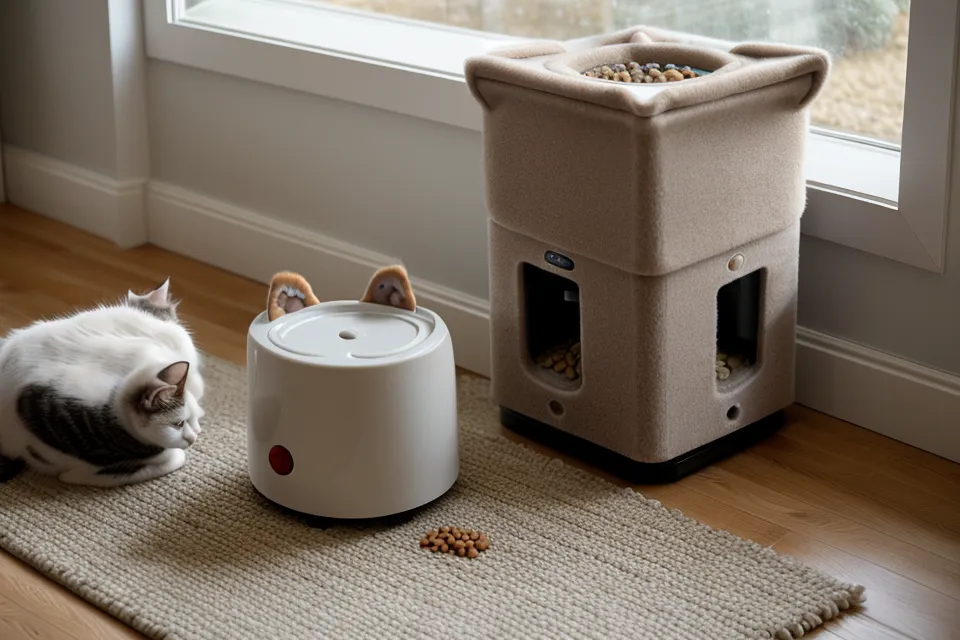
Sometimes the scarf-and-barf isn't about speed at all. It's nerves. If Beans thinks Hopper's about to steal his food, he eats faster, slow-feed mode or not. Pairing the feeder with a dedicated safe spot has helped more than any setting change did. I put a FunnyFuzzy memory foam bed in the corner of the kitchen, and Beans has started waiting there for the feeder to start clicking instead of hovering over the bowl. Four months of him kneading it like dough, and the thing still hasn't pilled or gone flat.
None of that touches what happens if you're running two cats on two different diets through two different feeders. That's a genuinely separate setup problem. Food safety on the wet-food side is its own animal entirely too, since it spoils on a counter timer no dry kibble feeder ever has to think about. What I can speak to directly is the workday logistics side: I laid out the actual schedule-building process, portion sizes included, in how to set up an automatic cat feeding schedule for long workdays, if you're past the slow-feeder question and into the how-do-I-time-this-around-a-long-shift question.
No feeder replaces a person, and I still check the app more than I probably need to. But between fewer ruined rugs and two cats eating at a pace their stomachs can actually handle, a decent slow feeder has turned out to be one of the better buys for this apartment. Go with the Petkit if you want the most reliable option and don't mind paying more for it. Go with the Petlibro if you want the barfing to stop without spending your whole freelance check. Either way, judge it by hour eleven of an absence, not by how smooth the unboxing looked. That's the only test that's ever actually mattered here.