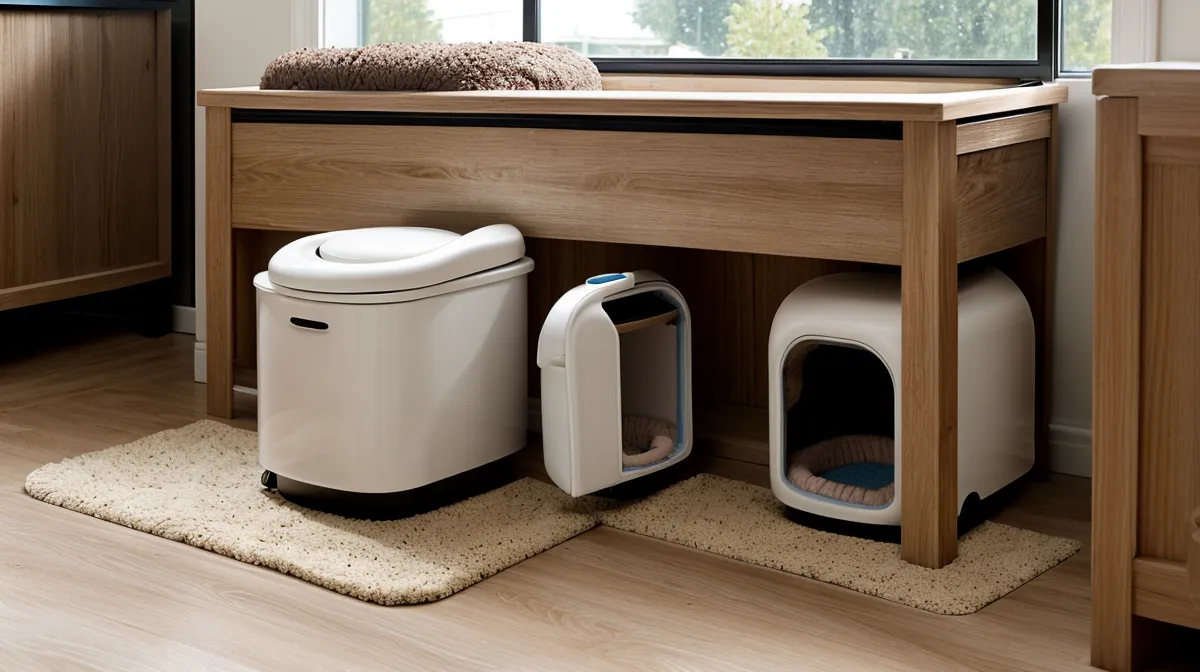
I unlocked my apartment door late one evening after a four-hour client workshop ran past dinner, bracing for the worst. Hopper met me with his signature raspy yowling, but past him, tucked between my pantry door and the fridge, the Petkit Pura Max was humming through a silent cleaning cycle. No litter mountain. No rancid greeting.
Quick transparency before we dig into the linoleum logistics: a few pet brands mentioned here send me a commission when you click through my links and make a purchase. I earn a commission at no extra cost to you, but every piece of hardware in my Denver rental was bought out of my own pocket and thoroughly dragged through daily life with Hopper and Beans. If an appliance fails my long-absence test, it gets booted out, commission or not.
The Small-Kitchen Squeeze: Why Floor Space Isn't the Only Problem
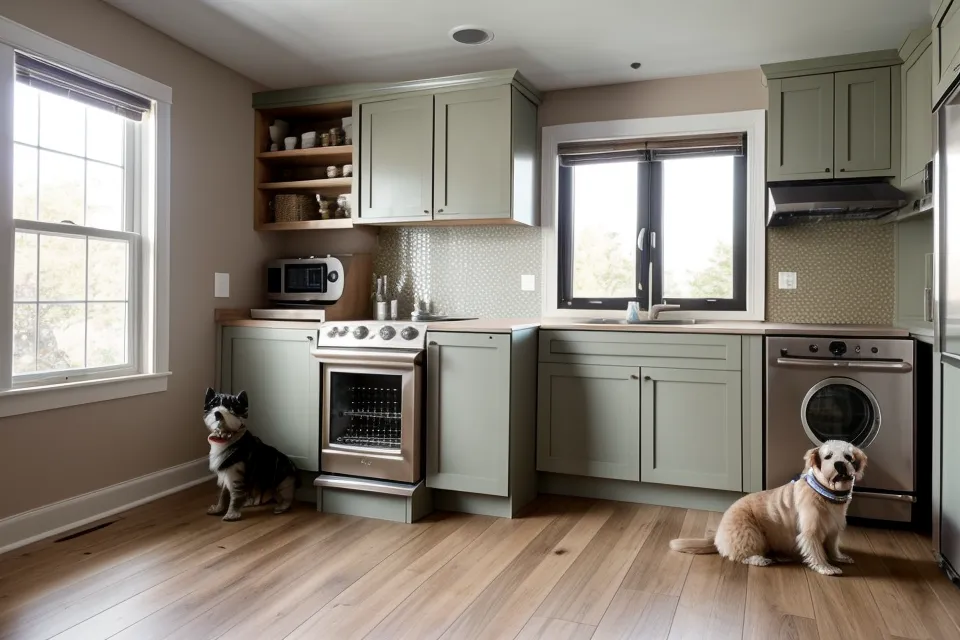
Living in a one-bedroom rental means playing a perpetual game of domestic Tetris. My bathroom has barely enough floor space to step out of the shower without kicking the baseboards, which left exactly one location with an electrical outlet to spare: the kitchen prep lane. Putting a cat litter box in the room where I chop garlic and boil pasta sounds like an immediate lifestyle violation. But leaving two indoor cats with a standard open tray during a ten-hour workday is a worse disaster.
Standard rental lease fire codes in Denver typically require at least thirty-six inches of unobstructed corridor clearance in cooking walkways. Squeezing an automated litter appliance into that corridor is a gamble. Looking at the appliance squeezed between the refrigerator and pantry, I spent late February staring at the gap, wondering if avoiding twenty daily scoops justified losing half my kitchen walking path. The unit occupies a square footprint that demands respect, but the physical dimensions don't tell the real story of how you live around it.
That brings me to the measurable tradeoff nobody mentions on the glossy sales pages: the rotating waste disposal mechanism requires significantly more overhead vertical clearance than traditional manual trays, despite its contained floor profile. With an ordinary tray, you slide it under a prep table or tuck it under an overhanging utility cart. The Petkit Pura Max can't do that. Because the internal 76 liters cylinder rotates completely on its axis and vents upward, you need generous open air above the machine so the exterior cylinder housing can breathe, clear sensors, and allow access to the top service hatch. If you tuck it beneath low shelves or dangling kitchen drying racks, you will constantly bump your elbows or block its maintenance cycle.
Unboxing, Setup Frustrations, and the 2.4 GHz Battle
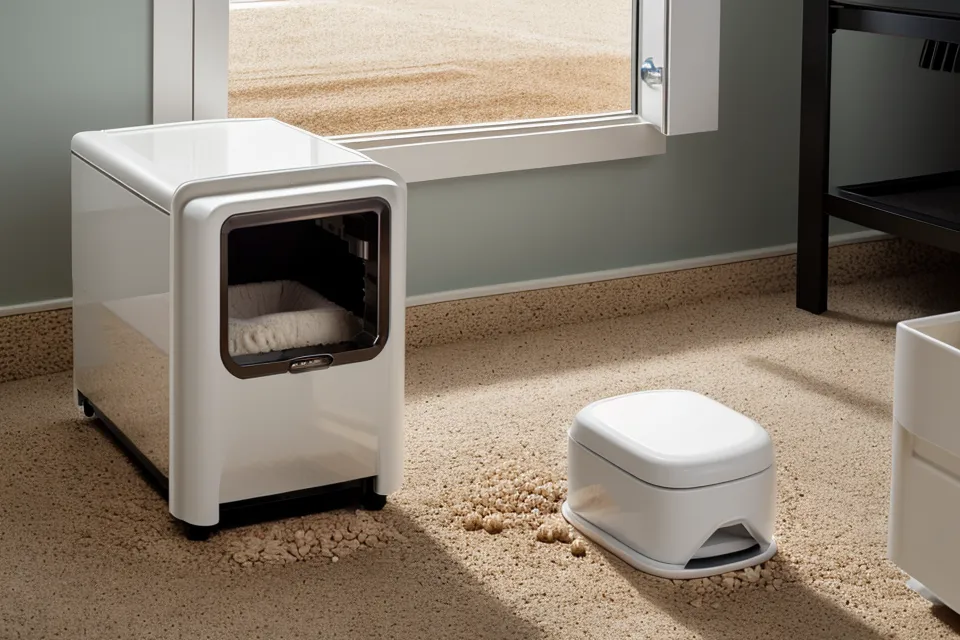
Setting up the hardware felt like installing a miniature dishwasher. The machine is solidly molded, and the inner cylinder feels sturdy, but onboarding it to home networking was an exercise in pure irritation. Like almost all smart pet appliances, the onboard board connects exclusively over a 2.4 GHz wireless frequency. If you run a modern mesh Wi-Fi system that automatically merges channels into a single unified SSID, the Petkit app will spin endlessly in failure.
I assumed my mesh router would negotiate the setup seamlessly, only to spend an hour clearing error codes before separating the 2.4 GHz channel on my admin dashboard. It is the classic IoT headache: you are sitting on the floor with two confused cats, watching a flashing pairing light while poking at network configurations. But once it bridged that band, the connection locked in and stayed rock-solid through Denver summer storms and occasional apartment power flickers.
Getting the cats acclimated went smoother than expected, largely due to the entrance geometry. The cylinder opening sits at an entry step threshold height of 200 millimeters. For Hopper, who is nine and getting a little creaky in his back hips, that low entry meant he didn't have to leap like an Olympic gymnast just to relieve himself. Beans, my ragdoll mix, spent the first forty-eight hours treating the glowing ambient nightlight like an alien landing pod, but he hopped in once he realized the clay litter inside smelled familiar.
If you have struggled with multi-pet meal policing in similar tight quarters, my experience with the RFID Shield Strategy taught me that sightlines matter just as much as physical boundaries. Keeping the litter hub and the feeding stations visually segregated in a tight flat is crucial to prevent territorial guarding.
The July Heatwave Odor Test
The real question for any kitchen-placed box isn't motor power; it's smell. In late winter, dry Denver air masks a lot of sins. But one humid evening in July, after a thunderstorm rolled off the foothills and trapped 80-degree mugginess inside my un-airconditioned rental kitchen, the Pura Max faced its trial by fire. Cooking dinner three feet away from cat waste is the ultimate test of build quality.
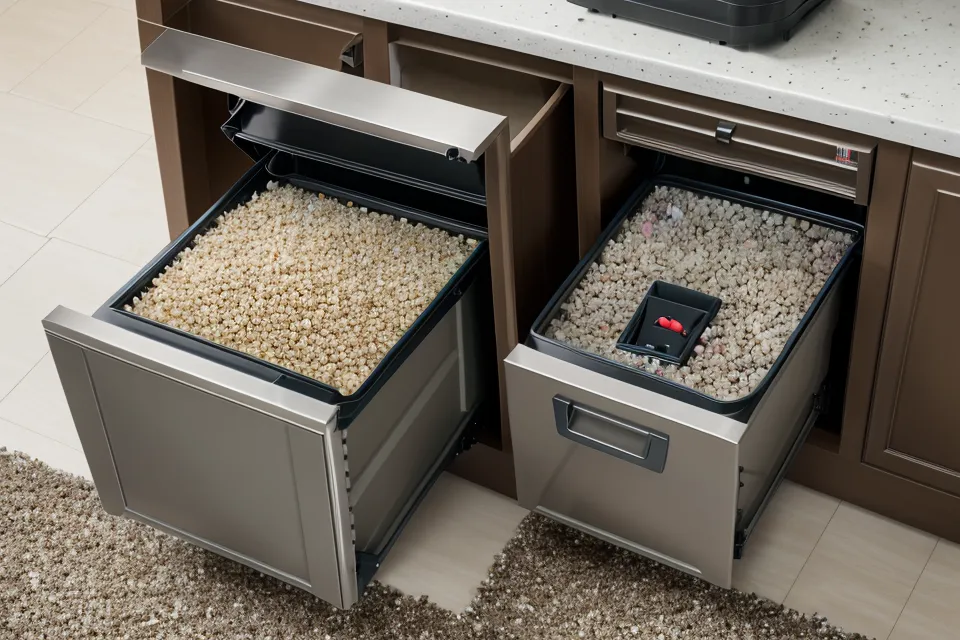
The enclosed 7 liters waste collection bin uses a spring-loaded sealing trapdoor that snaps shut whenever the drum finishes a rotation. Unlike cheaper gravity-dump designs that just tip clumps into an open under-tray, this sealed bin genuinely isolates the funk. After about three weeks of running the unit through that summer heat, I realized I wasn't catching faint ammonia drifts while making coffee in the mornings. Kneeling on yellowed kitchen linoleum late at night, watching the drum revolve under dim cabinet lights while Beans stalked the outer rim, I could barely detect anything beyond the neutral scent of clean litter.
The companion app also proved surprisingly capable. When comparing notifications against secondary gear in my apartment like my Petlibro pet fountain and automatic feeder setup, the Petkit alerts delivered near real-time logs. While Petlibro notifications can sometimes lag behind by thirty minutes, the Petkit app pinged my phone while I was stuck in afternoon design syncs, logging pet weights, visit durations, and waste bin full warnings with sharp precision.
Keeping water stations clean nearby is equally important when space forces high-density pet zones. I spent time optimizing my sink nook with the best battery operated cat fountains to avoid stringing messy power cords across my cooking line.
Seven Months of Wear: What Works and What Stalls
By late September, having put roughly seven months of daily wear into the machine, the mechanical trade-offs crystallized. Cleaning the internal cylinder isn't difficult, but it is awkward in an apartment bathroom. You have to lift the heavy 76-liter drum completely off its motor base and carry it into the bathtub to hose it out. It feels like wrestling an oversized soup kettle through a narrow doorway. If your tub doesn't have a handheld sprayer, you will dread deep-clean days.
Then there are the proprietary trash liners. You can technically bunch up a standard small garbage bag inside the drawer, but the sensor ring that tracks waste levels gets easily confused if excess plastic bunches up around the edges. You end up buying their custom-fitted bags to avoid false bin-full errors. It is a minor annoyance, like having to buy specific desiccant packs for a specialized food dispenser, but it is part of the long-term running reality.
Test Window Log:
- Duration: Late February through late September (about seven months)
- Test Subjects: Hopper (9yo domestic tabby, 12 lbs), Beans (4yo ragdoll mix, 14 lbs)
- Refusals / Hang-ups: Beans refused to enter for the first two days until the automated cleaning delay was increased to 15 minutes; manual Wi-Fi band reconfiguration required during unboxing.
- Mechanical failures: Zero drum jams; two false waste-full app alerts caused by generic bundled trash bags.
The Verdict: Should You Put One in Your Kitchen?
If your goal is to reclaim your sanity during long workdays and prevent your rental from smelling like a petting zoo, the Petkit Pura Max is the single appliance I trust to handle the job without babysitting. It demands vertical breathing room, and wrestling the drum into the tub every month is a minor workout, but the odor control and reliable cycle mechanism make it genuinely viable even in tight kitchen corridors. Current pricing and bundle configurations fluctuate, so check the vendor's page for the latest terms before jumping in.
But if you are dealing with an ultra-narrow corridor where overhead clearance is strictly blocked by low shelving or hanging pots, a low-profile manual setup or a simpler smart ecosystem from an alternative like Petlibro makes more sense for keeping your walkways clear. For my Denver kitchen, the Petkit stays plugged in.
Petkit
Pros
- ● Sealed 7-liter waste drawer completely locks in odors in tight spaces
- ● Low 200mm entry threshold is easy on older cats with stiff joints
- ● Push notifications arrive within seconds to log cat weight and visits
- ● Spacious 76-liter interior drum accommodates larger cats comfortably
Cons
- ○ Requires overhead vertical clearance that prevents tucking under counters
- ○ Initial router onboarding requires manually splitting dual-band mesh Wi-Fi
- ○ Proprietary waste liners are required to prevent false full-bin sensor errors