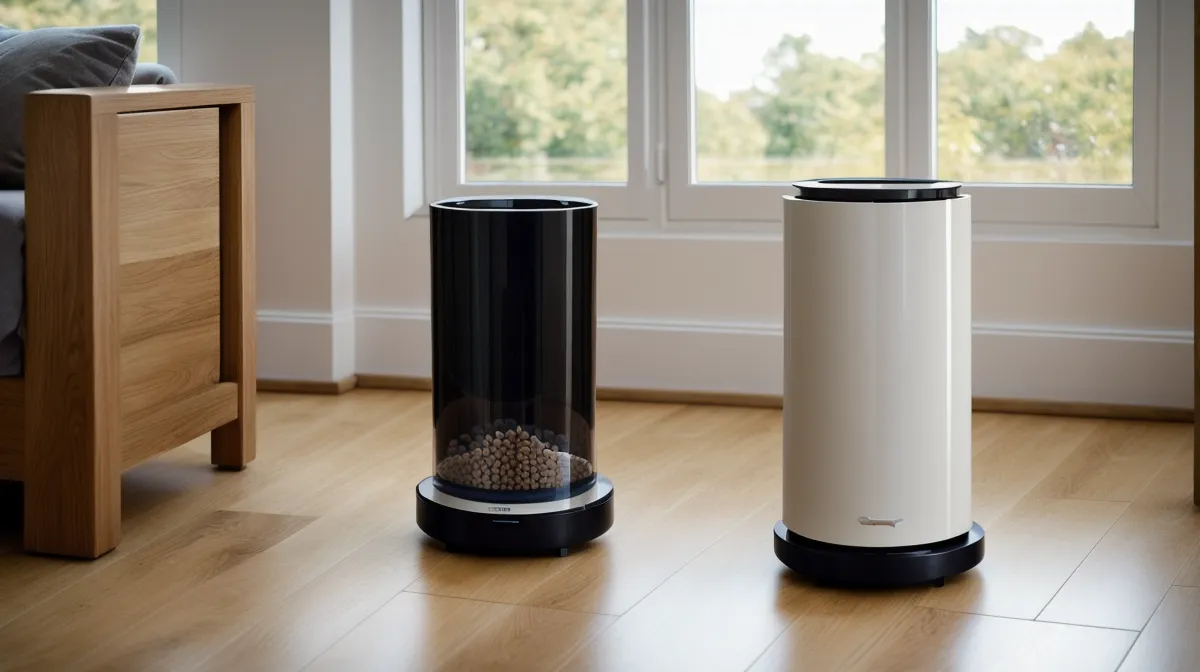
Standing in a client’s glass-walled conference room one Tuesday evening last February, I watched my phone battery hit the red zone while knowing Hopper and Beans were likely staring at a silent, jammed feeder fifteen miles away. It is a specific kind of professional torture. You are trying to look composed while discussing UX wireframes, but in the back of your mind, you are picturing a nine-pound tabby staging a coup against your living room curtains because his 6:00 PM kibble drop never happened. I have been a freelance product designer in suburban Denver long enough to know that deadlines do not care about your cats’ digestive tracks, but after the third time I came home to a blinking red light and a pair of furious felines, I realized my 'smart' home was actually pretty stupid.
That night was the catalyst. I had spent a lot of money on a high-end feeder that promised the world, only to have it choke on a slightly oversized piece of kibble like a cheap dishwasher trying to handle a tablespoon of peanut butter. I realized that in my line of work, we never launch a product without a backup server. Why was I treating my cats’ survival like a beta test? I decided right then to treat their dinner schedule like a high-stakes product launch: no single point of failure allowed. If the WiFi died, the food had to drop. If the power flickered, the food had to drop. If a rogue moth crawled into the dispenser, the cats still needed to eat.
The Sinking Feeling of the 'Device Offline' Notification
There is a unique brand of anxiety that comes with pet tech. It’s the sinking feeling of seeing a 'Device Offline' notification on my watch while my client starts another twenty-minute presentation about 'brand synergy.' You can’t exactly walk out to reboot a router when you’re mid-pitch. I’ve logged enough of these misfires to know that most pet gear is designed for people who work nine-to-five and live in areas where the power grid never hiccups. Here in the Denver suburbs, a heavy snow or a summer thunderstorm can knock things sideways in a heartbeat.
When you are miles away and that notification pops up, your brain goes into a tailspin. You start doing the math of how long a cat can go without a meal before they decide the sofa is an edible alternative. This is why I spent the early spring during a major product launch redesigning my entire approach. I stopped looking for one 'perfect' machine and started building a system. I realized that relying on a single app-controlled device is like having a car with no spare tire and no roadside assistance. It’s fine until it isn't, and it usually 'isn't' right when you are at your busiest.
Designing for Failure: The Dual-Band Redundancy Strategy
My new philosophy is simple: redundancy is a love language. If I’m not there to scoop the food myself, I need at least two independent systems that don't know the other exists. I started mapping out what I call 'Dual-Band Redundancy.' This isn't just about having two feeders; it’s about having two different *types* of technology. If both of your feeders rely on the same WiFi router, and that router decides to take a nap, you don't have a backup—you have two expensive paperweights.
I paired a high-tech unit that runs on the 2.4GHz WiFi band with a secondary, low-tech battery-operated timer. Why the 2.4GHz band? Because in a suburban house, 5GHz is like a weak flashlight that can't see through walls. The 2.4GHz frequency is the workhorse of the smart home world; it has the range to punch through the drywall and reach the kitchen even if the router is tucked away in my home office. Most people get frustrated when their 'smart' gear drops off the map, not realizing they’ve forced it onto a high-speed frequency that’s allergic to distance. I leaned into the older, slower, but more reliable frequency for the primary feeder to ensure that signal actually stays put.
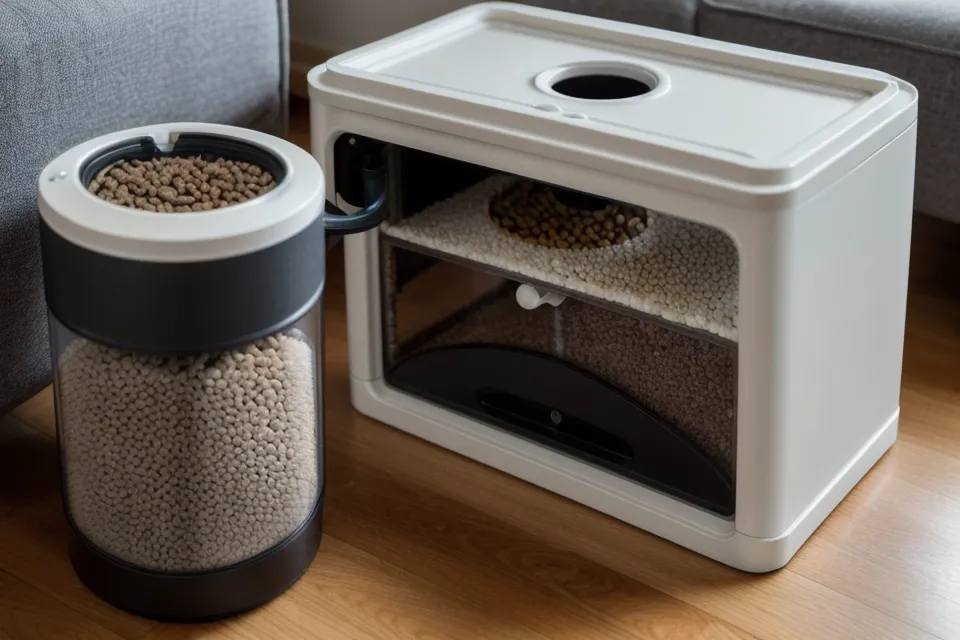
But even the best WiFi is a fickle friend. That is where the secondary backup comes in. I don't use another smart feeder for the backup; I use a 'dumb' one. I’m talking about those rotating trays that run on a simple internal clock. It doesn't care about my internet connection or whether my phone is dead. It just knows that when the clock hits zero, the lid opens. It’s the analog safety net every digital household needs. I actually wrote about this transition in a previous post about the late-shift peace of mind I found after stress-testing my way out of those early feeding failures.
Why 1.5V D-Cells are the Unsung Heroes of Pet Tech
If you look at the bottom of a pro-grade feeder, you’ll usually find a compartment for those massive D-cell batteries. There is a reason for this. While your phone runs on fancy lithium-ion that degrades if you look at it wrong, the standard 1.5V alkaline battery is a beast of burden. It has a shelf life that outlasts most of my client contracts and enough capacity to keep a motor turning even when the house is dark. During my six weeks of stress-testing, I intentionally unplugged my units to see how they’d handle 'the big dark.'
Most people forget to even put batteries in their feeders. They treat the power cord like a permanent umbilical cord. But a real fail-safe system assumes the cord is a lie. I’ve found that the better units will maintain their internal schedule even without WiFi, provided those 1.5V D-cells are fresh. I now keep a recurring calendar invite for myself to swap them out every six months, regardless of whether they’ve been used. It’s cheap insurance. It’s the difference between coming home to happy cats and coming home to a 'Device Offline' graveyard.
During a localized power flicker during a summer thunderstorm in late August, this setup finally paid for itself. The router knocked out, the lights went dark, and I was stuck in a windowless office downtown. I didn't panic. I knew the D-cells would trigger the mechanical motor right on time. The mechanical arm inside the feeder is designed to drop a standard kibble increment—usually about 1/8 cup—regardless of whether it can 'talk' to the cloud. When the power came back on and my phone reconnected, I saw the log: 'Manual Mode Feeding Successful.' That 1/8 cup of kibble felt like a victory lap.
The Sensory Relief of a Successful Drop
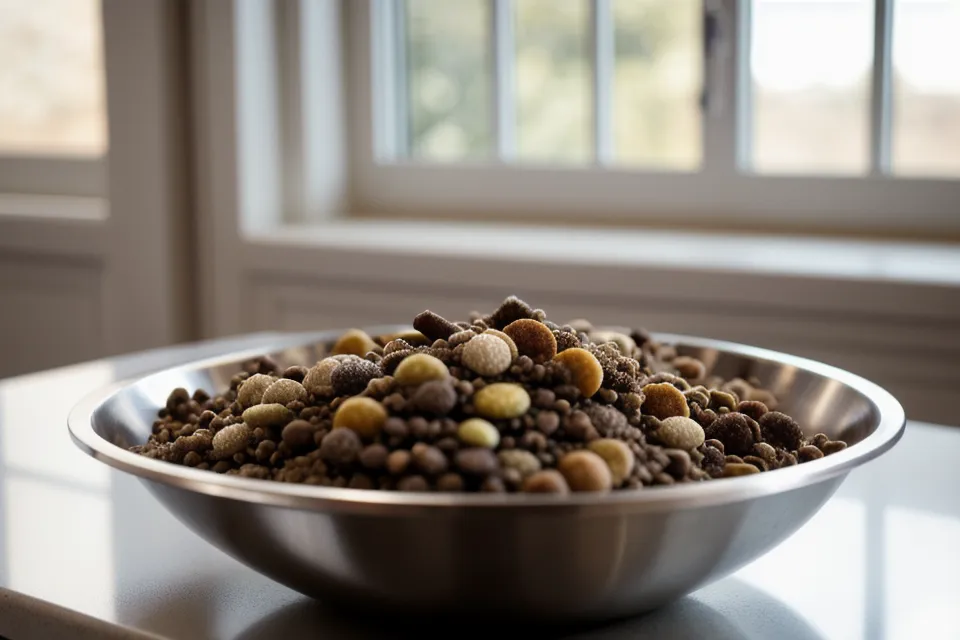
There is a specific sound that every pet parent with a camera-feeder knows: the hollow, metallic 'clink-clink-clink' of kibble hitting a stainless steel bowl echoing through my phone’s speaker in a quiet office. It is the most beautiful sound in the world when you’re stuck behind a laptop at 8:00 PM. It’s the sound of a job well done, even when you aren’t the one doing it. I’ve sat in many a meeting, muted my mic, and just listened to Beans crunching away. It’s better than any 'calm' app on the market.
However, after about seven months of this automated life, I noticed something a bit unsettling. Automated feeders are great for my schedule, but they can actually hinder bonding by removing the owner's role as a provider. I realized that Hopper and Beans had started looking at the plastic tower in the kitchen with more affection than they looked at me when I walked through the door. I had become the 'roommate who cleans the litter box,' while the robot was the 'God of Food.' This is the hidden cost of the fail-safe system: you might solve the hunger problem, but you risk weakening the emotional reliance that defines the human-pet relationship.
To combat this, I’ve made it a rule that the 'fail-safe' is for the late nights only. On the days I am home by five, I pull the plug on the automation and do the scooping myself. I want them to remember that the food comes from me, not just a motorized auger. It’s a delicate balance. I want the peace of mind that tech provides, but I don't want to be replaced by a circuit board and three D-cell batteries.
The Reflection After a Long Deadline
Looking back at where I was last winter—stressed, frantic, and constantly apologizing to my cats—the difference is night and day. The relief of finishing a three-hour client post-mortem and checking the camera to see two sleeping cats instead of a crime scene of knocked-over trash cans is worth every penny and every minute spent configuring SSIDs and battery backups. I’ve learned that 'smart' doesn’t mean 'complex.' It means having a plan for when the 'smart' stuff fails.
If you’re a freelancer or someone whose schedule is more of a suggestion than a rule, don't just buy a feeder and hope for the best. Build a system. Get a unit that likes 2.4GHz, pack it with fresh D-cells, and maybe keep a secondary 'dumb' timer in the corner just in case. Your cats won't thank you—they’re cats, after all—but they will be asleep and satisfied when you finally turn the key in the lock at midnight. And in my book, that is the best deliverable a designer can ask for.