
Four feeders. That's the real count from the past three years, and two of them died the same way — jammed mid-dispense, motor humming while Hopper stared at an empty bowl and I sat frozen on a client call. Multi-cat households push pet-tech reliability further than most smart-feeding copy admits, and three years of buying this gear with my own money taught me not to trust a spec sheet until it survives a real week in my kitchen.
Quick disclosure before I name names: some of the pet brands below pay me a commission if you buy through my links, at no extra cost to you. I buy everything out of pocket first, and anything that didn't hold up to Beans trying to body-slam it at midnight got returned before it ever made this list.
The Feeder That Finally Lost My Trust
The last straw was a feeder from a brand called Loomora — cheap, plastic, and prone to jamming the second the hopper got more than half full. Before that, I'd tried the manual route: portioning a week of meals into containers every Sunday night, then setting phone reminders to swap them in and out of the fridge on schedule. It worked for about ten days. Then a meeting ran long, a swap got missed, and Beans went hungry because nobody swapped the container out in time.
That's when I started checking the cat cam obsessively. I remember pulling it up mid-meeting once and watching Beans paw at an empty dish, the timestamp reading just past six in the evening, no sound in the clip, just that small, insistent motion against an empty bowl. That image is what pushed me past half-measures and into buying something actually built to run itself.
Why Does a Multi-Cat Household Break Most Feeders?
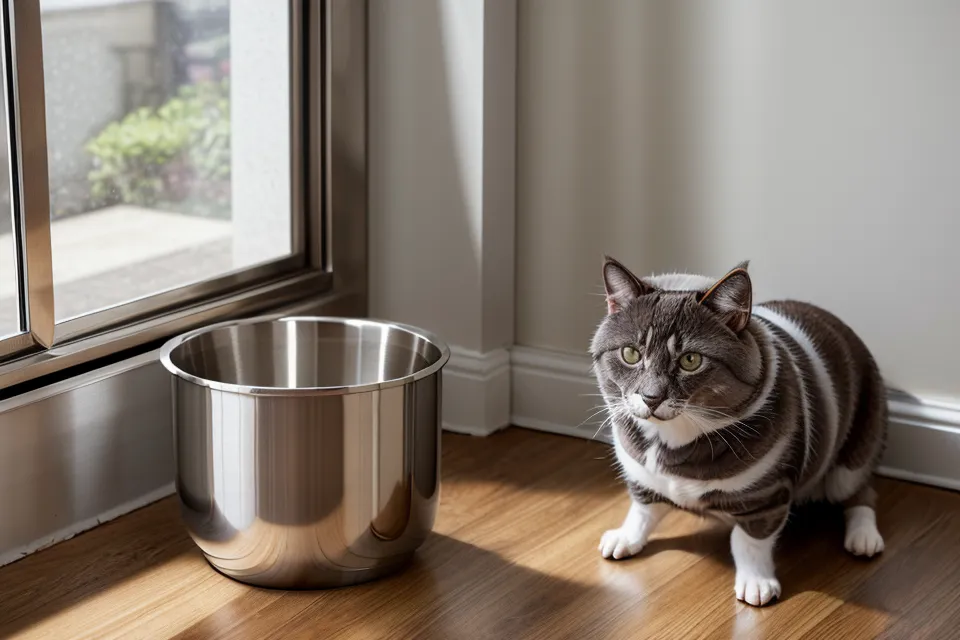
Hopper is nine now and needs to stay lean; Beans is four and eats like the food might vanish if she doesn't finish first. A single scheduled dispense doesn't account for that gap — one cat gorges, the other loses out — and cheap feeders make it worse, since most run on porous plastic that traps grease and bacteria, which is a fast route to feline acne along the chin. Portion accuracy matters more in a multi-cat house than the spec sheet ever admits — a feeder that's off by even a little per cat compounds fast over a week, and separating diets by cat, usually through some kind of chip or tag recognition, is a completely different feature than just splitting one schedule in half. I eventually landed on the Petkit system after weeks of side-by-side testing, mostly because the stainless bowl actually rinses clean instead of holding kibble grease in plastic seams the way the old one did.
Beans has also tried to headbutt the lid clean off more than once, which is its own argument for tamper-resistant design — a feeder that isn't built to survive a determined cat convinced there's more food inside just doesn't last in this house.
The Wi-Fi Habit I Had to Break
Setup was its own small disaster. I spent twenty minutes convinced the unit was defective before realizing my phone was still on the 5GHz band and the feeder only pairs over 2.4GHz — a detail that trips up almost anyone running a modern mesh router. Wi-Fi stability turned out to matter more than expected too. Drop the connection and you lose the push notification, even though the motor itself keeps running on its own internal schedule regardless. I wrote up more of these setup snags in The Late-Night Designer's Guide to Reliable Feeding: My Six-Month Stress Test of Smart Pet Gear, if you want the blow-by-blow.
Once the pairing was sorted, the notification system became the actual selling point for someone working late. I got a push alert with a photo the second the hopper dispensed, which works as its own kind of remote check when I can't physically walk into the kitchen. And on one call, the mechanical whirring in the background got loud enough that a client stopped and asked if I had a printer running; I had to explain it was just a robot portioning kibble so nobody yowled at me mid-deadline.
What Happens When the Power Actually Goes Out?
A blizzard knocked out power and internet across my part of Denver for the better part of a morning this past winter, which is exactly when a 'smart' feeder usually turns dumb. The unit I'd picked has a battery backup and its own internal clock, so the schedule fired on time even with the Wi-Fi dead. No push notification came through, but I heard the dispense cycle run through the wall and knew the boys had eaten.
One offline gap matters even more with two cats on two different portions, because if one feeder goes dark while the other keeps syncing to the cloud, the two schedules can drift apart fast and nobody notices until a bowl's been empty for hours. Jam mechanics are the other half of that resilience question — a feeder that only fails gracefully while it's online isn't actually reliable, it's just quiet about its problems until the Wi-Fi drops. But that's the tradeoff I got into more in Design Deadlines and Hungry Cats: How I Finally Automated My Denver Rental for Hopper and Beans.
Ten Weeks of Cross-Checking With Other Testers
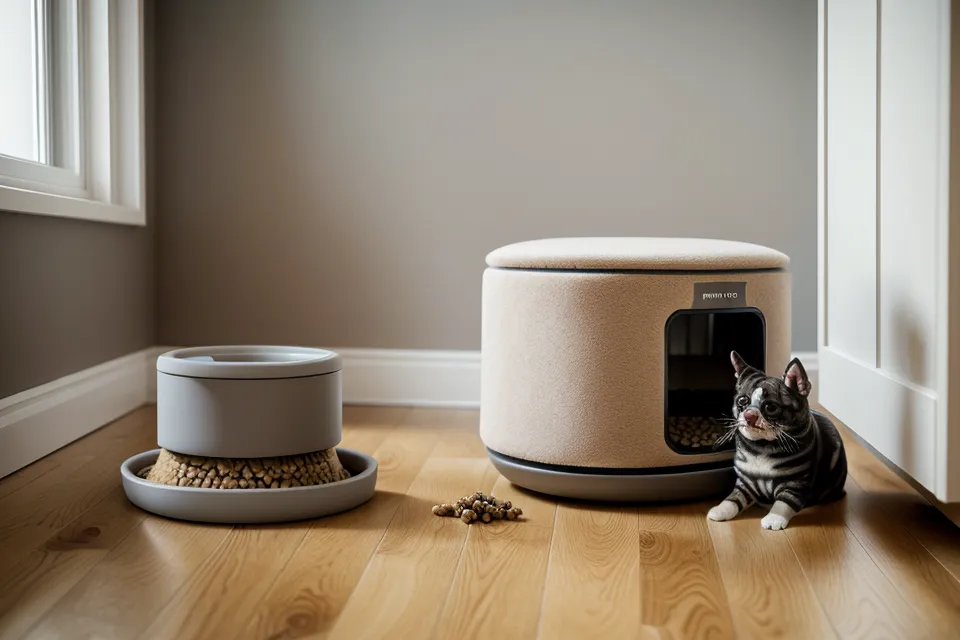
Ten weeks in, the habit of checking the app every hour finally faded — the good kind of boring, where nothing goes wrong long enough that you stop expecting it to.
Some of that confidence came from comparing notes with other people running the same tests. My friend Tomoko, who I know through a local design-and-tech meetup, has three cats of her own and runs her own version of this setup without me ever asking her to — she's the one who first flagged that a different brand's notifications lagged behind the actual dispense by several minutes. A guy named Parveen, who I've traded messages with since a Reddit thread on misfeeding failures, runs parallel tests out in Phoenix — his water is harder than mine, his HVAC is louder, and he keeps flagging fountain problems that show up worse in hot, dry climates than they ever do here.
Water hardness affects filter life more than people expect. Even here, I've watched a chalky white ring creep up where the fountain's base meets the tile, and that mineral buildup is what kills a filter early, long before age does. Humidity does something similar to dry kibble — a hopper that isn't sealed well lets moisture creep in and the food goes stale faster, which is part of why replacement desiccant packs for the Petkit aren't cheap but are worth swapping on schedule. Wet food is a separate problem entirely, since it can't just sit on a timer without spoiling, and that's a variable multi-cat households have to weigh apart from dry kibble scheduling altogether.
A Cheaper Feeder and a Guilt-Offering Bed
I've also started ordering from FunnyFuzzy for their orthopedic beds, mostly as an apology for the nights I'm stuck at my desk past dinner. Just know shipping runs seven to ten days since it comes from an overseas warehouse, so don't order the week before a trip and expect it on time.
For anyone watching their budget on the feeder itself, the Petlibro line dispenses just as accurately in my own testing and costs roughly half what the Petkit runs, though push notifications in my logs have shown up thirty to sixty minutes late more than once. Fine if you're not relying on the alert itself. Less fine if that alert is your only confirmation a meal actually went out.
Check the Dumb Features Before You Trust the Smart Ones
If I'm handing one piece of advice to another dual-income household running two cats on two schedules, it's this: check what the device does when the internet doesn't work before you check what the app looks like. A feeder that only performs while it's connected will eventually fail you on the one day you actually needed it — a blizzard, a router reset, a dead modem at the worst possible hour.
The unit that earned a permanent spot on my counter is the Petkit, mostly because it kept the schedule running with or without a signal. Hopper and Beans don't care which brand is bolted down. They care whether the bowl is full when they walk over to check it, and that's the only metric that's ever actually mattered in my kitchen.