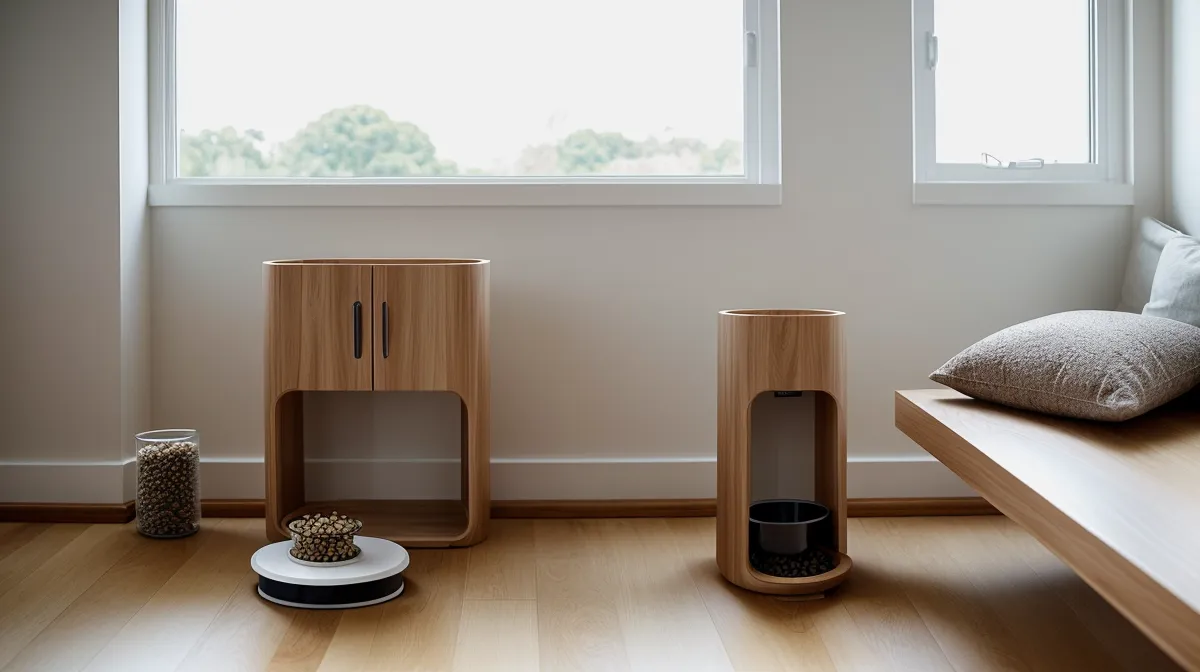
A cat can go many hours without you noticing something's actually wrong. I used to measure that in missed meals. These days I measure it in whether I'm paying attention at all, which gets harder when you're finishing a deck at Denver Central Market in RiNo and a feeder alert buzzes on your phone that you almost swipe away without reading. Pet tech automation promised to close that gap for people who work from home on a schedule that doesn't match a cat's stomach, and after years of buying, testing, and returning gear, I've got real opinions about which parts of that promise actually hold up.
Quick disclosure, since it matters before anything else: some of these links pay me a small commission if you buy through them, at no extra cost to you. I still buy every product with my own card first. If it fails a real test in this apartment, it doesn't get linked here, commission or not.
Working from a rented apartment in Lakewood, with cat fur drifting across my keyboard mid-call more often than I'd like to admit, I've spent about three years buying, testing, and returning pet tech that doesn't survive a real workday. The feeder I trusted before this current setup was a bargain-bin model with a USB-C charging port tucked on the back, and two months of bathroom humidity worked into that port before I noticed the corrosion. It stopped holding a charge mid-week, and both cats ate out of a mixing bowl for two days while I hunted for a replacement.
Picking a Feeder That Could Survive a Twelve-Hour Client Day
Most of the feeders I first looked at ran into the same wall: Wi-Fi that wouldn't hold a steady connection. That's a rabbit hole I've tested to death somewhere else on this site, so I'll spare you the deep version here. My friend Tomoko, who I know from a local design-and-tech meetup, kept sending me feeders she thought I should buy instead, gear I couldn't yet justify the cost of.

Petkit ended up winning that search, and it holds a 4.4 rating for a reason, though not because the setup was painless. The app walkthrough during onboarding assumes you already know what 2.4GHz Wi-Fi means, and it took me longer than I'd like to admit. But once the Petkit is dialed in, it holds — the stainless bowl pops loose for the dishwasher, and Beans, who will straight-up walk away from food if it's been sitting more than an hour, has never once turned her nose up at a fresh drop.
If you're just getting your rental automated for the first time, The Renter-Friendly Guide to Automated Pet Care: Gear That Doesn't Require a Toolbelt covers the basics without risking your security deposit.
Testing the Battery Backup When the Power Went Out
One power flicker in my suburb lasted just long enough to reset the microwave clock, and it turned into an accidental head-to-head test. The Petkit switched to battery backup before I'd even found a flashlight, and a notification hit my phone while I was still swearing at a dark monitor. No skipped meal, no drama.
Across the kitchen, I had a Petlibro running as a backup water station. It's half the price of Petkit, carries a 4.2 rating, and the fountain does a genuinely good job getting a picky ragdoll to drink more than she would from a plain bowl. But the Wi-Fi took the better part of forty minutes to reconnect once the power came back. Parveen, whom I know from a Reddit thread on misfeeding failures, runs the same tests out of her place in Phoenix, and she sent over her own log from that same week — her Petlibro took even longer to catch back up.
That gap between hardware convenience and software lifespan is the thing I keep coming back to. A feeder can be built like a tank, but if the company stops pushing app updates in a couple of years, you're left with an expensive paperweight, not the $150 feeder you paid for. I go deeper on that risk in When Meetings Run Late: A Product Designer's Stress-Tested Guide to Reliable Pet Tech for Hopper and Beans.
The Vet Chart That Rewrote Hopper's Feeding Schedule
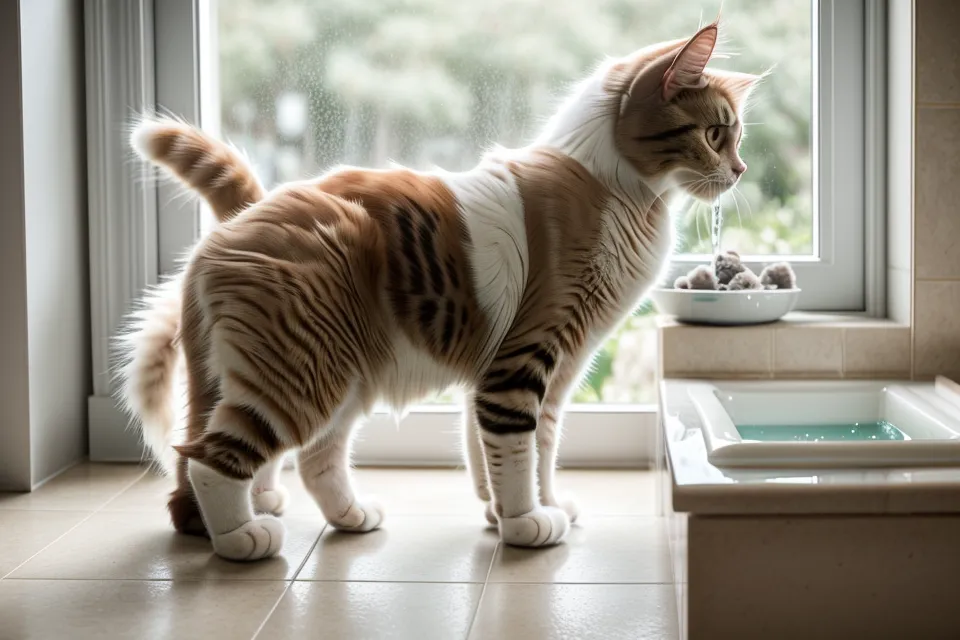
Feeding is the easy half of this automation project. Health monitoring is the harder half, and it's the part that actually earned its keep during a stretch when I was heads-down on a deadline and almost missed that Hopper had gone quiet — not sick-quiet, just quieter than his usual demanding self. A Maven Pet tracker on his collar is the only reason I caught it; it flagged his overnight movement dropping in a way I could have easily explained away.
My vet pulled up his chart at the next visit and pointed to one line: kidney values climbing, early chronic kidney disease, wet food twice a day starting now, no skipped doses. That's a different kind of scheduling problem than a hopper full of dry kibble — wet food left out too long isn't just unappetizing, it's a food-safety question of its own, and someone else on this site has already tested that exact setup with ice packs, so I won't try to redo their work here. Feeding two cats two different diets out of the same kitchen corner turned into its own puzzle too, since Beans still eats free-choice dry food and Hopper can't.
By week eight of the new routine, his labs had leveled off enough that the vet stopped bringing it up every visit, which felt like the first real proof the schedule was working. I still double-check the camera feed most evenings just to confirm the wet food actually got eaten and not just dispensed, a habit that's saved me from a false sense of security more than once. And Beans has her own tell: the second that tray cracks open, she comes flying across the kitchen floor, claws skittering, chasing the sound before the food even hits the bowl.
Smart Feeders, Stainless Steel, and What Actually Needs Washing
Comfort mattered more once Hopper was managing a chronic condition instead of just getting older. I swapped his flat mat for a memory foam bed from FunnyFuzzy, mostly because he was sleeping more and I wanted that sleep to actually rest his joints.
The FunnyFuzzy orthopedic pads use dense memory foam that holds its shape instead of flattening into a pancake after a few weeks, unlike the poly-fill bed it replaced. Watching him curl up on it while I finish a late design review is honestly most of why the whole setup feels worth it.
Plastic bowls on an automatic feeder are basically an invitation for feline acne, a bacterial buildup that's a pain to clear once it starts. That's the whole reason I won't run a feeder without a stainless or ceramic insert — the Petkit bowl pops out and goes straight into the dishwasher, no scrubbing a plastic seam by hand.
For everything else — filters, dental treats, the enzyme cleaner that gets kibble grease out of the grout — I order in bulk from Revival Animal Health. Their site looks like it hasn't been redesigned since the early 2000s, but the inventory runs deep into things big-box stores stop carrying, and an actual person answers the phone when you call. A lid a cat can't pry open, desiccant that stays fresh inside the hopper, a fountain filter that can handle how hard your tap water runs, portioning that's accurate to the gram — each of those is its own maintenance conversation, and I won't pretend I can do all four justice here. Same goes for a feeder that can still dispense on schedule without a live internet connection, or one that won't jam mid-drop — both worth knowing about before you assume Wi-Fi alone keeps a cat fed.

A few weeks back I caught myself checking my phone for a feeder alert that never came, and realized that's actually the win: no phantom-vibration feeling, no wondering if I missed a meal. I trust the 2.4GHz band is holding, I trust the battery backup is ready if the Denver grid hiccups again, and I trust Maven will flag it if Hopper goes quiet before I notice on my own. There's more on why that backup battery specifically earns a place in the setup in Why My Smart Feeder Needs a 'Dumb' Battery Backup: Lessons from a Suburban Denver Winter.
Counting What Changed After Eight Weeks
Automation cuts both ways. I haven't had a furious-cat wake-up call in months, but I'm also aware of how tethered I am to a handful of apps now. Physically, the Petkit is still unmatched for a workday that runs long — it's built solid and the steel insert stays easy to keep clean — though I keep a manual bowl in the cupboard just in case the whole system has a bad night.
If you're working with a tighter budget and mainly want a reliable moving water source, the Petlibro fountains are a solid way in. Just don't lean on their app notifications alone if you're going to be out of the apartment more than half a day — build in a backup check some other way.
Look, none of this turns a one-bedroom rental into a control room, and it shouldn't have to. What it does is take the guessing out of a long client day — whether the feeder actually fired, whether the water's still moving, whether a quiet cat is just tired or something worse. The lesson that stuck with me after eight weeks of the new routine: automation only earns your trust once it's been tested against the one meal, or the one bad week, that actually mattered. Everything before that is just a demo.
Ready to stop the evening standoff at the food bowl? Start with the Petkit for the actual feeding schedule and a FunnyFuzzy bed for wherever your cat naps while you finish one more email. That combination is what finally let me get through a deadline without one eye on the kitchen.