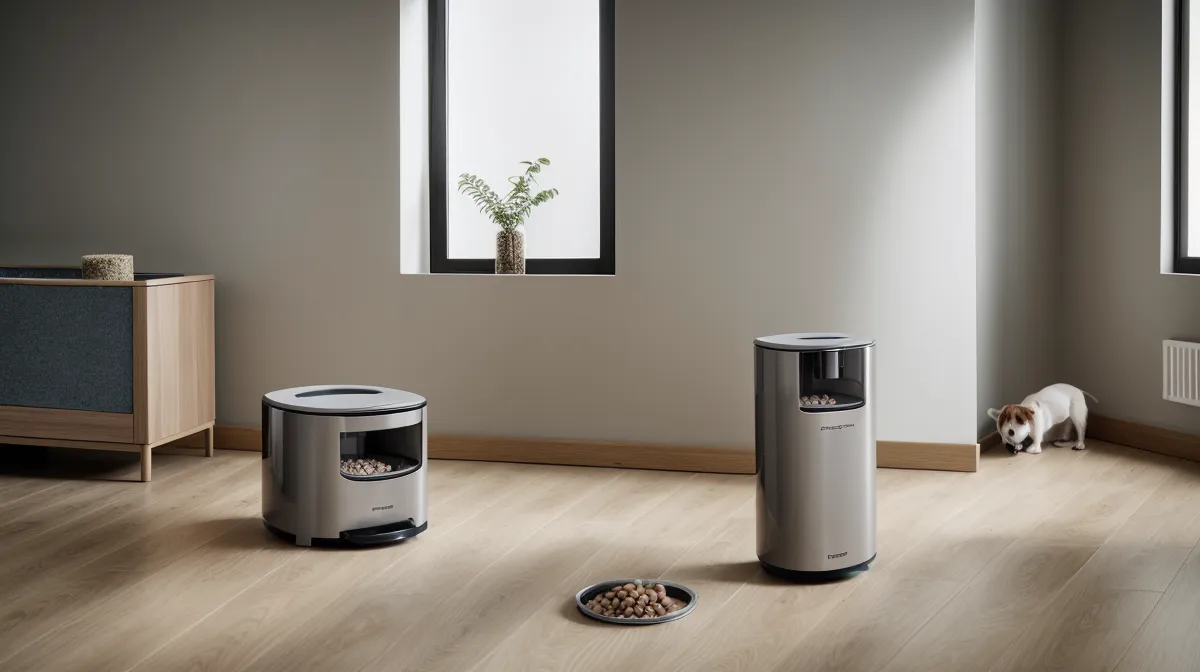
A feeder that jams once and skips a snack is a shrug. A feeder that jams during a nine-hour client sprint, with Hopper pacing the kitchen and Beans finishing off whatever's left in the other bowl, is a full-blown household emergency you can't step out of a meeting to fix. That gap, between mildly annoying and actually bad, is the whole reason I test renter-friendly pet tech instead of trusting the marketing copy: automated feeding gear either holds up when nobody's home, or it becomes one more thing you're managing badly, and your cats' health is the thing on the line either way.
Quick disclosure before anything else: some of the pet brands linked here pay me a commission if you click through and buy, at no extra cost to you. I buy every piece of gear myself first — no review units, no sponsored boxes — and live with it in my kitchen for weeks before it earns a mention here. If Hopper or Beans won't tolerate it, it doesn't make this guide.
Renting Changes What Easy Install Actually Means
My lease bans wall anchors, permanent hardware, and anything that leaves a mark when I move out, so every fountain, feeder, or camera on this list has to stand on its own weight or grip with serious rubber feet instead of a Command strip and a prayer. Most of this renter-friendly pet tech also insists on an older 2.4GHz Wi-Fi band instead of the 5GHz most routers push by default, and discovering that mid-setup on a Saturday afternoon is its own flavor of frustration.
But connection stability matters differently depending on what you're asking the gear to do. A feeder that loses its Wi-Fi link for ten minutes should still know what time it is and drop the meal anyway — that's a separate skill from letting you check a camera feed to confirm it happened. Verifying a meal through an app is one thing; trusting the machine to keep working with no signal at all is another, and a lot of gear is only good at one of the two.
Petkit or Petlibro: Which One Actually Survives a Blackout?
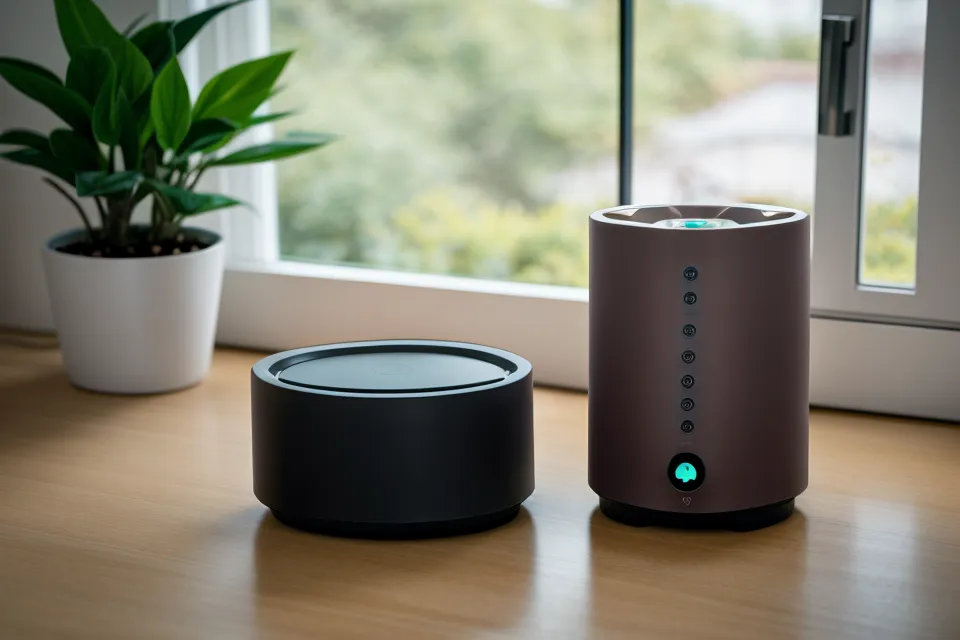
Look, I ran Petkit and Petlibro side by side during a chaotic spring launch, checking dispense logs from a coffee shop between calls like a nervous air traffic controller. Petkit is the heavy-duty dishwasher of feeders — sturdy, unbothered by a bad week, with a stainless bowl that actually rinses clean instead of trapping kibble grease in plastic seams, and a battery backup solid enough to get Hopper fed straight through a Denver thunderstorm blackout without a missed portion. The lid's gasket still gives my thumb a small chill every time I press it back into place after washing it, like the silicone hasn't caught up to room temperature. A tiny detail, but the kind that tells you somebody actually thought about the parts nobody photographs for the listing. My rental's circuit in Lakewood isn't the most trustworthy thing in the world, so onboard battery stopped feeling like a nice-to-have and started feeling like the entire point of buying the thing.
The feeder I tossed before any of this was an off-brand model I grabbed on sale, and its plastic lid warped near a sunny window until it never sat flush again — kibble dust worked into the motor housing until the auger seized for good. Around week seven of running the replacement's camera log, I caught the moment that convinced me the upgrade wasn't overkill: Hopper hunched low over the bowl, working through three portions that had clearly dropped in a single go. Not something you catch live. Days later, usually, scrubbing through footage and wondering how long it had actually been happening.
Petlibro, on the other hand, is the value pick that doesn't feel like settling. I've been living with the Petlibro day to day while separately testing the Petlibro Granary for months, and the mechanics feel just as solid even though the app interface looks dated and crams too many settings onto one screen. How precisely a feeder measures each portion is a rabbit hole worth its own write-up, but neither of these two cheats the math to hit a price point. It also tucks into a small apartment rental kitchen without looking like lab equipment, which matters more than you'd expect when the kitchen doubles as the dining room.
Jams, Tampering, and Feeding Two Cats Out of One Machine
And if you're worried about jamming specifically, I've spent real time working out how to stop automatic feeder jams before they start, which usually comes down to kibble size and how much humidity sits inside the hopper — Denver's dry air helps, but the little desiccant packet taped inside the lid is doing more work than people give it credit for. Feeding two cats with different appetites out of one machine is its own puzzle, and so is keeping a determined cat from muscling the lid open when a portion feels too small: Beans has tried more than once, unsuccessfully, but not for lack of effort. Wet food adds a separate layer entirely, since anything left sitting out too long in a warm apartment stops being dinner and starts being a problem — worth its own conversation, not a footnote here.
Comfort and Cat Health Matter as Much as the Feeder Schedule
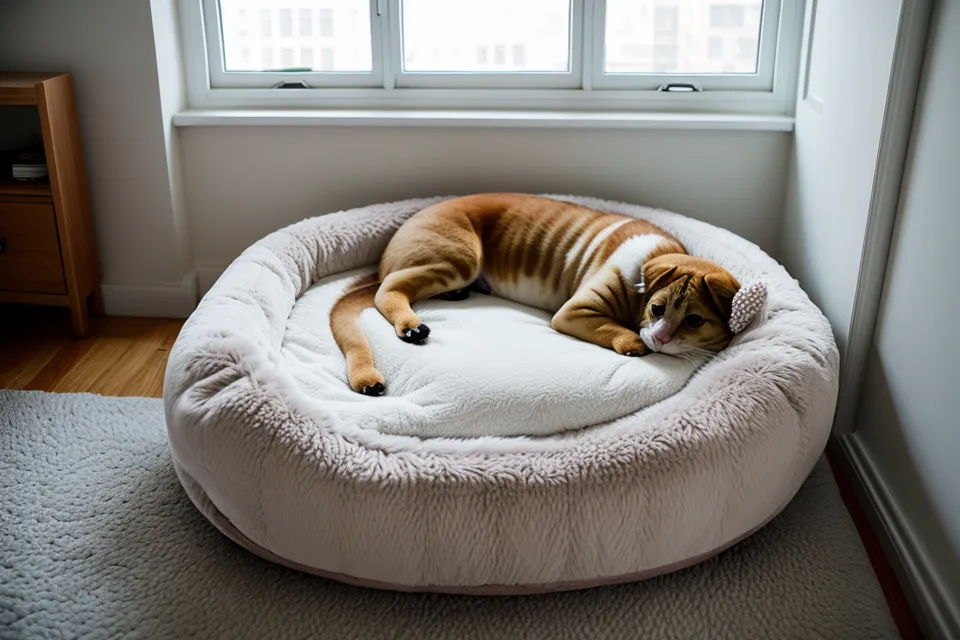
Feeding solved is only half the job, since a stressed cat won't eat well no matter how precisely the kibble drops. If Hopper's rattled because someone's dog is barking through the wall, a perfectly portioned bowl won't fix his mood. That's where the FunnyFuzzy bed earned its spot on this list. I ordered one over the holidays, sat through the international shipping delay without much complaint, and it needed zero mounting — it just sits in the corner and gives an aging tabby somewhere soft to fold himself into after a long day. Worth the wait.
Supplies are the unglamorous part nobody talks about online. Two cats in one apartment burn through litter and cleanup gear faster than you'd guess, and I order most of it in bulk through Revival Animal Health — their site looks like it hasn't been touched since the dial-up era, but an actual person answers the phone and knows the inventory, which counts for something now that most companies route you straight into a chatbot.
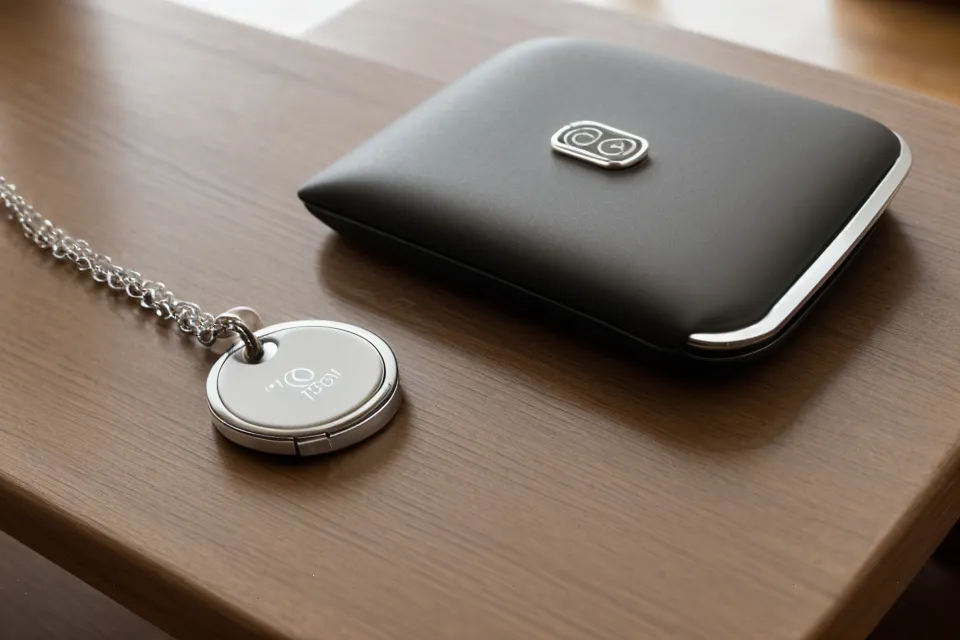
One evening last spring I noticed something off in the Maven Pet logs — Hopper's activity numbers had quietly dipped for a few days running, his fur already halfway across my laptop keyboard while I stared at the graph. Because it tracks movement with an accelerometer on the collar tag, it flagged the slowdown before I'd caught it just watching him move around the apartment. It turned out to be a minor stomach bug that cleared up fast, but for a renter who can't install floor sensors or a permanent camera grid, a collar tag that tattles on a behavior change is worth having. Parveen Thatcher, a contact of mine who runs the same kind of tests out of Phoenix against harder water than anything Denver deals with, won't buy a single piece of gear off star ratings alone anymore, and neither will I — a glowing average on a product page tells you nothing about whether the thing survives a long day away.
The Renter's Bottom Line on Automated Pet Care
None of this is about being lazy or hands-off as a pet owner. It's about building a backup system for the days your freelance schedule or your commute eats into the exact window your cats expect dinner — and lately most of my long days end with a grocery run to Trader Joe's on Josephine Street before I even make it home, so whatever's happening at the apartment is already a few hours old by the time I walk in. You don't need a toolbelt or a weekend of drilling to get this right. You need gear that respects your lease and your Wi-Fi signal, and enough dead-battery scares logged to know it's worth paying extra for a backup.
If you're ready to stop white-knuckling the drive home wondering whether dinner happened, start with the Petkit for straightforward reliability, or look at the FunnyFuzzy line if what your pet actually needs is a soft place to land after a long day alone. Just measure before you order — sizing on some of this gear runs smaller than the photos suggest, and nobody wants to repack a box during a week that's already been long enough.