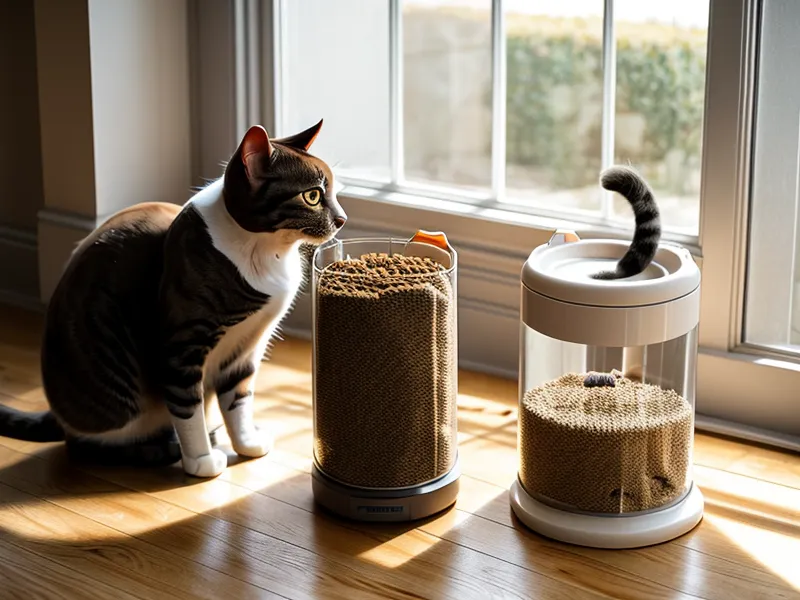
A twist-lock lid takes two thumbs and a full turn to open. A press-fit lid takes one determined paw and maybe ten seconds. That gap explains most of the automatic feeder break-ins I've tested, and it has nothing to do with cat behavior or how much smarter one cat is supposed to be than another. It's pet tech marketing that leans on the "clever kitty" story, not the mechanics actually sitting on your counter.
The gear that changed my mind wasn't fancy. It was a cheap timed dial feeder, the kind with a rotating drum you load by hand and a motor that spins it open on schedule. Twice, the drum caught wedged mid-turn and never finished rotating, and twice a meal just didn't happen. The camera app still has the clip saved: six in the evening, Beans pawing at an empty dish, no kibble anywhere near the bowl. That wasn't a cat outsmarting a machine. That was a machine quietly failing while nobody was home to notice.
The Cat Behavior Myth Behind Every Feeder Break-In
Search "cat keeps breaking into feeder" and half the results call the cat sneaky, stubborn, or obsessed with food. Cats are crepuscular, wired to hunt hardest at dawn and dusk, so a feeder sitting there full of food during those hours isn't a bowl anymore, it's a puzzle worth solving. That's biology doing its job, not a character flaw. Blaming the cat is a bit like blaming a toddler for reaching a cookie jar somebody left open on a low shelf. The tell is always the same before you even see it happen, a scatter of dry kibble skidding across the floor, quick paws chasing the sound of a tray creeping open before the motor's even finished turning.
Owners respond by turning the kitchen into a security checkpoint, and most of it backfires. Duct tape gives a paw more grip, not less. A dog crate around the whole unit just moves the fight to the bars, and a friend of mine who fosters rescue dogs through the Denver Dumb Friends League says the same crates that hold a fifty-pound foster dog still can't out-stubborn a cat with a paw and enough patience. None of that touches the actual problem. I ran a head-to-head between two popular models during a stretch of back-to-back deadlines, written up as the late-night deadline test, and the winner had nothing to do with locks. It came down to better internal geometry.
What Actually Stops a Determined Paw
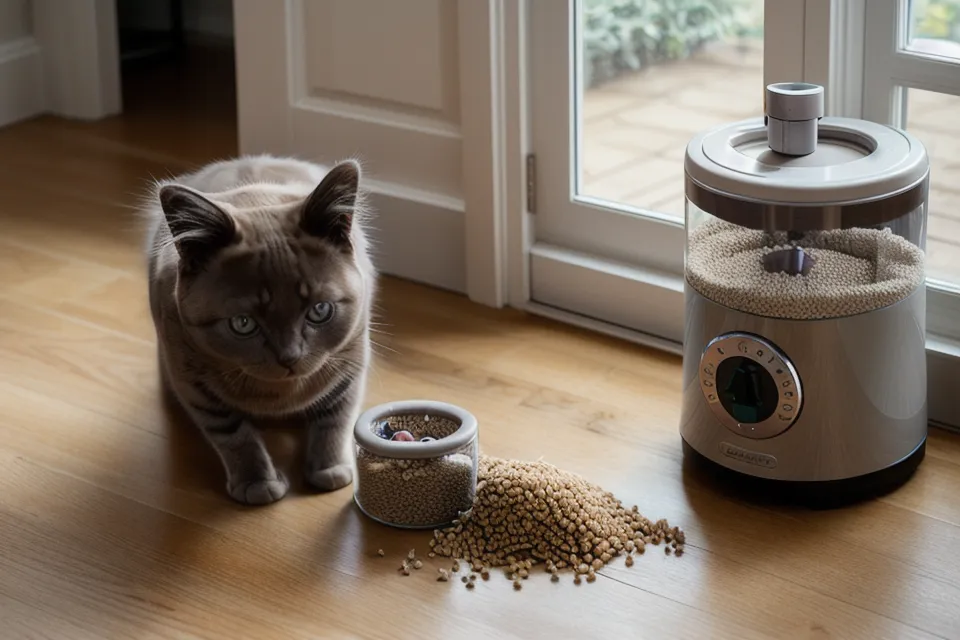
Real security comes down to eliminating leverage points, not adding more tape. A twist-lock lid needs two hands and real rotation to open, about the same resistance as a childproof aspirin bottle, and that alone stops most cats cold. A press-fit lid that just pops up with a little pressure from below is a standing invitation, especially once a cat learns to use its back legs as a fulcrum against the counter edge.
The chute matters just as much as the lid. A dispensing hole that sits flush with the front panel lets a paw go straight in like reaching into a chip can, right down to the rotor. A recessed or angled chute, sometimes built as a small internal staircase, keeps that same paw from ever touching the moving parts, and a cat that can't feel the mechanism usually gives up faster than one that can.
Weight matters too, and it's the detail people skip. A feeder light enough to tip when a full-grown cat leans on it turns into a toy the moment it wobbles. Look for a wide, heavy base, or add a silicone mat underneath if the unit you already own rocks too easily.
Should You Lock It Down Harder, or Take the Game Away?
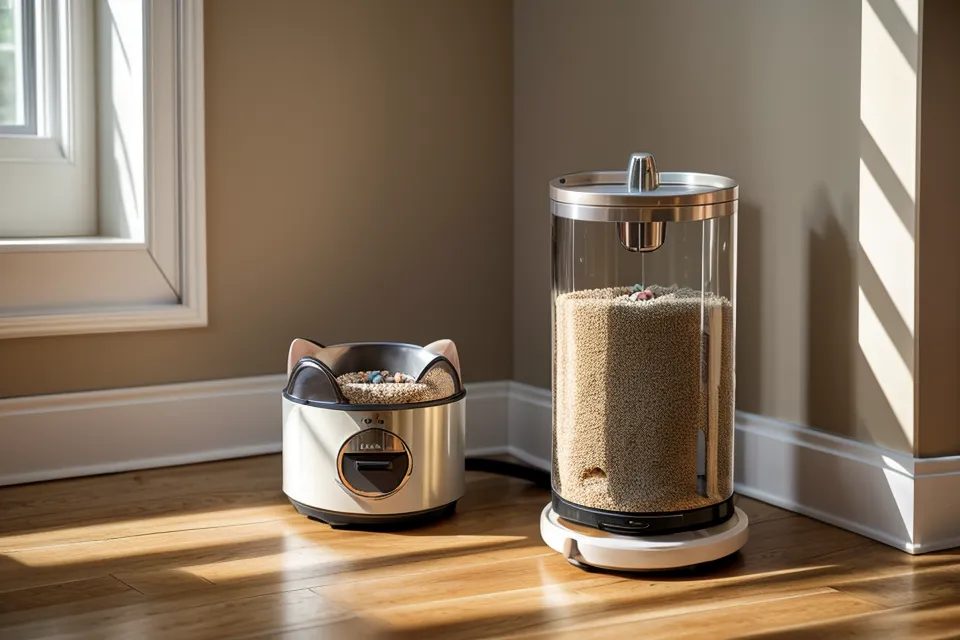
Most advice says to reinforce the feeder until it's basically a safe. But in my testing, extra locks usually make a determined cat try harder, because the whole thing turns into a puzzle with a payoff at the end. Every time a paw knocks loose even one kibble, the behavior gets rewarded, the same way a slot machine keeps someone pulling the lever on an occasional win.
Look, the fix that actually worked here wasn't more hardware. It was making the feeder boring, pairing a properly guarded chute with a food schedule predictable enough that there was never a reason to gamble on it. Once the machine stopped paying out anything extra, the interest faded on its own. No more thunking against the lid at odd hours. Just a bowl that quietly did its job.
The Rest of the Setup That Still Trips People Up
None of that fixes everything else that can go wrong with this gear, and a secure lid alone won't save you from separate failures. Portion accuracy is its own headache once you're trusting a schedule instead of eyeballing the bowl yourself. Multi-cat households add another layer on top of that, since two cats on different diets usually need a microchip feeder that reads a collar tag rather than one that just runs on a timer. Wet food spoils fast enough that any feeder handling it needs its own ice-pack setup, a different problem entirely from a dry kibble reservoir. Running an automatic fountain too? Denver's hard water will clog a filter faster than the manual ever admits. Power loss is a separate risk on top of all this, since a feeder with no battery backup just stops the moment the outlet does, and I get into the battery and app side of long shifts away from home in my survival guide for long shifts, if that's new territory. Jamming mid-meal is common enough with rotating-drum designs that it deserves its own troubleshooting pass, not just a better lid. And if you actually want to confirm a meal dropped instead of guessing, pairing the feeder with a camera to check on pets is the only way to know for sure. A feeder that can only dispense while connected to the internet is a liability, not a feature, since the schedule needs to live on the device itself and not only in the cloud. Wi-Fi drop-outs are their own separate test, since one router hiccup at the wrong hour can desync a schedule for hours before anyone notices. And humidity is quieter but just as damaging: moisture creeping into the food reservoir turns dry kibble sticky enough to jam a rotor within weeks.
Buy for Mechanics, Not Marketing
Skip the price tag and the app screenshots when you're comparing automatic feeders, at least at first. Check the lid: does it click or twist, or does it just press into place? Check the chute: can a pinky finger reach the rotor, or is it recessed behind a turn? Check the base: does it rock when nudged, or does it sit like it's bolted down? After enough product testing, those three answers predict a break-in far better than star ratings or reviews mentioning how easy the setup was.
Get those three right and the rest of the setup, the app, the camera, the backup battery, just has to not get in the way. It stops being a fight with the cat and turns into a fight with the claims printed on the box, and that one's a lot easier to win.