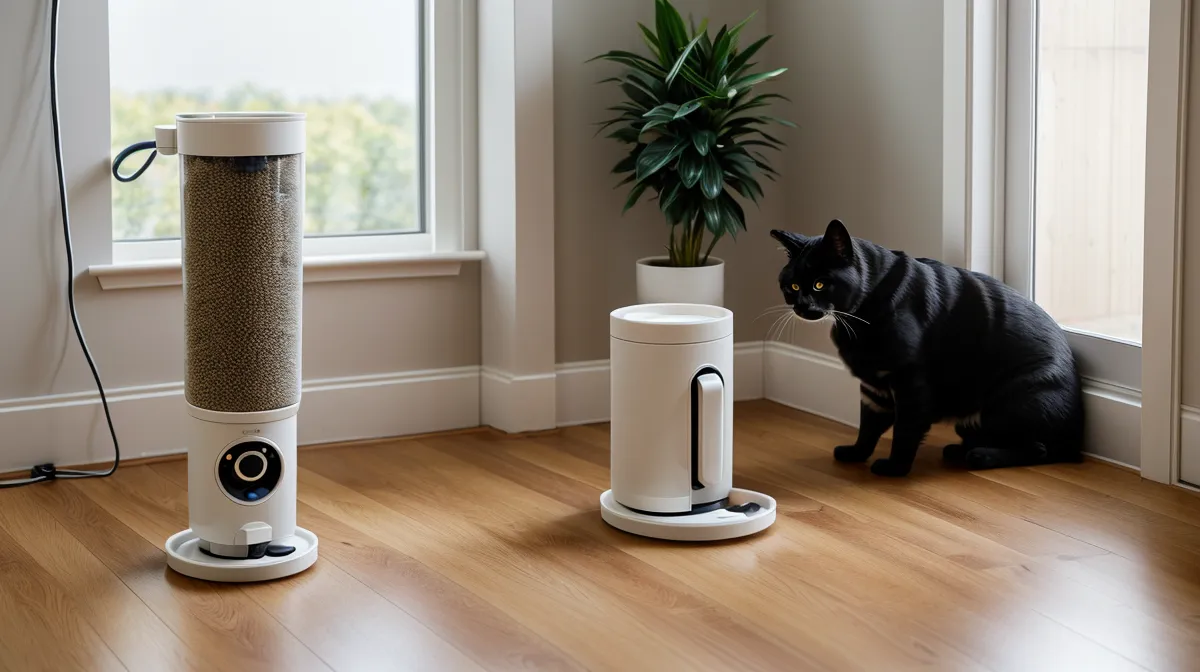
I pulled into the driveway mid-July well after the streetlights had flickered on, my brain still hummed with the fluorescent buzz of a six-hour client workshop. All I wanted was to see my cats and maybe eat a bowl of cereal that wasn't technically for breakfast. But when I walked into the kitchen, Hopper wasn't weaving through my legs. He was sitting three feet away from his feeder, his pupils so wide they swallowed his irises, staring at his bowl with the kind of silent judgment usually reserved for a broken printer. Then I smelled it—that weird, sharp, sour scent of blue cheese. I’d stepped on a scout. A thin, vibrating line of ants was marching straight up the side of the feeder and into the chute like it was an all-you-can-eat buffet at a convention center.
As a freelance designer, I live and die by my gear. If my laptop fan sounds slightly off, I’m opening the casing. When I started buying smart pet gear in 2023, I applied that same obsessive 'stress-test it till it breaks' mentality. Most people think an automatic feeder is a set-it-and-forget-it appliance. In reality, it is a four-liter bucket of highly aromatic protein sitting in a climate-controlled room. To an ant, that’s not a cat bowl; it’s a fortified bunker with enough supplies to sustain three generations of a colony. If you’re a renter like me, you can't exactly douse your kitchen in heavy-duty industrial pesticides without losing your security deposit or worrying about what Beans, my ragdoll mix, is licking off the floorboards.
The Tiny Mechanics of an Invasion
The specific pest I was dealing with is the Tapinoma sessile, or the Odorous House Ant. They are tiny—usually between 2.4mm to 3.3mm. To put that in perspective for any non-techie, they are smaller than the charging port on your phone. Most automatic feeders are designed with a silicone impeller to move kibble, but even the tightest tolerances leave gaps. If an ant can find a way into a sealed bag of chips, a plastic hopper with a mechanical chute is like an open window during a Denver heatwave.
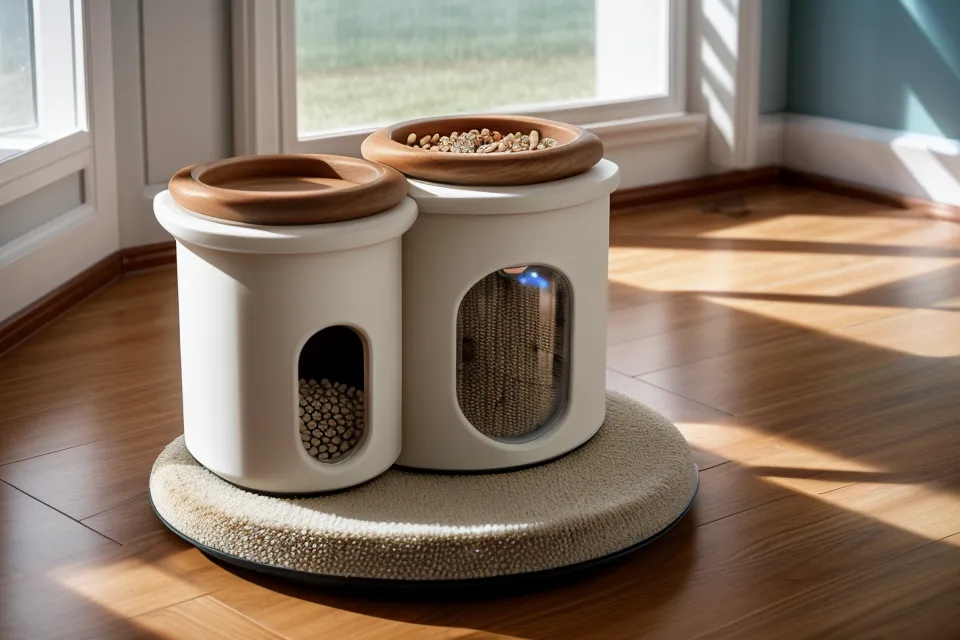
During that first week of testing in late August, I realized that the smart feeder's design actually works against us. These machines keep the food dark and dry, which is exactly what a scout ant is looking for. When I wiped down the base and accidentally crushed a few, that blue cheese smell hit me again. It’s a distinct pheromone signal. By the time you see one ant, they’ve already mapped your kitchen. They have laid down an invisible chemical highway that tells the rest of the colony exactly where the 4-liter jackpot is located. Cleaning the feeder with just water is like trying to erase a permanent marker with a dry paper towel; the trail is still there, even if you can’t see the ants anymore.
The Moat Myth and Why It Fails
If you search for ant-proofing tips, the first thing everyone suggests is a 'water moat.' The theory is sound: ants can't swim, so you place the feeder in a shallow tray of water. I tried this during a particularly brutal heatwave in September. I used a baking tray with a minimum water moat depth of 0.5 inches, thinking I’d finally won. I hadn't. Within two hours, Beans had decided the moat was a secondary drinking fountain, splashing water into the base of the electronic feeder. Hopper, meanwhile, just looked at the wet floor and refused to eat, acting like I’d turned his dining room into a swamp.
But the real kicker—and this is the part most advice columns miss—is that a moat can actually backfire. During that September stretch, I watched a scout ant reach the edge of the water. It didn't just turn around. It signaled. Ants are looking for water just as much as they’re looking for food in the summer. By providing a moat, I wasn't just protecting the kibble; I was providing a hydration station. In my experience, elevating a feeder on a water-filled tray actually triggers a massive colony-wide raid because the scouts report back that there is both a food source and a permanent water supply in the same location. It’s like putting a sign on your house that says 'Free Buffet and Open Bar.'
The Seal is the Secret Vulnerability
After about a week of testing different barriers, I stopped looking at the floor and started looking at the lid. Most high-end feeders have a compartment for a desiccant bag—those little 'do not eat' silica packets that keep the food crunchy. I noticed that the seal around this compartment was often the weakest point. Ants would climb the power cord, reach the top of the hopper, and slip through the lid's ventilation gaps to get into the main 4-liter tank from above.
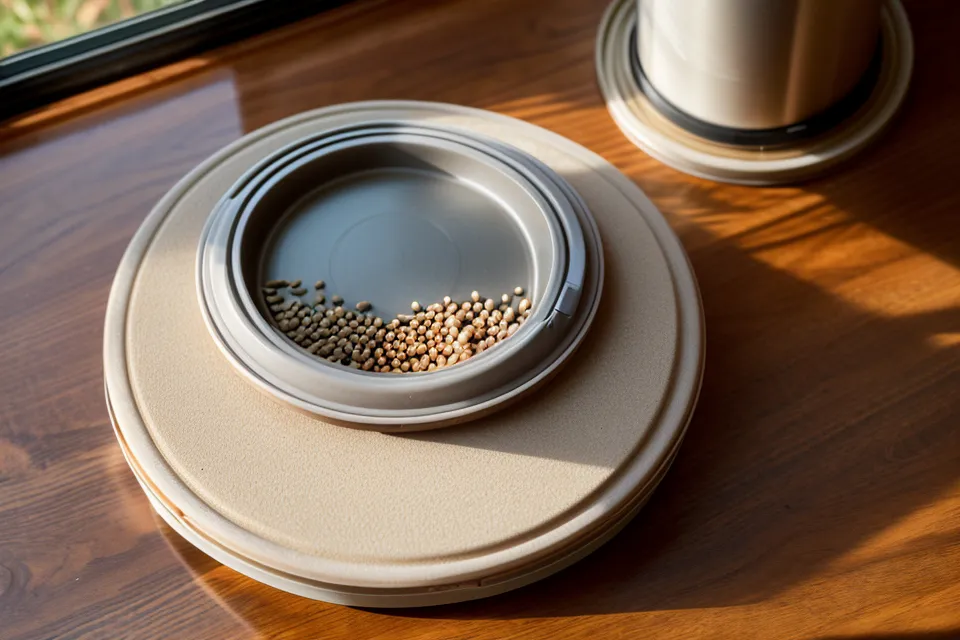
I’ve written before about how being a renter means finding solutions that don't involve a toolbelt or permanent changes to the unit. In the renter-friendly guide to automated pet care, I talk about the importance of placement, and that applies here too. If your feeder is touching a wall or sitting near a baseboard, you’re giving the ants a bridge. I moved the feeder to the center of a large, smooth silicone mat. The friction and the lack of 'climbing' surfaces made it much harder for the ants to get a foothold without being exposed. But the real 'aha' moment came when I realized the power cord was their primary highway. I started coating the last few inches of the cord (the part nowhere near the cats' mouths) with a thin layer of unscented petroleum jelly. It’s like a grease trap; they simply can't cross it.
Stress-Testing the Cleanliness Routine
The only thing that truly stops a summer invasion is breaking the pheromone trail. If you don't do this, you're just delaying the inevitable. I now use a 50/50 mix of white vinegar and water to wipe down the area around the feeder every evening. It smells like a salad for ten minutes, but it's the only thing that neutralizes the 'food this way' signals the ants leave behind. I learned this the hard way after coming home to a jammed feeder for the third time—not because the motor failed, but because so many ants had crawled into the internal gears that the sensor thought there was a kibble blockage.
It’s a lot like maintaining a dishwasher. If you don't clean the filter, it stops working. If you don't scrub the 'ant highway' once a day during peak summer, the smartest feeder in the world will eventually become a bug hotel. I also started keeping the hopper only half-full. Even though it holds 4 liters, keeping less food in there means the scent isn't as pungent, and the 'turnover' is faster. Fresh food smells less like a target than food that’s been sitting in a plastic bin for three weeks. If you're struggling with the mechanical side of things, I've logged some notes on how to stop feeder jams that might help you identify if your 'jam' is actually a hardware issue or a pest problem.
The Peace of Mind Factor
When you work long hours and have a 9-year-old tabby like Hopper who views a delayed meal as a personal betrayal, you need to know the tech is going to hold up. I’ve logged enough feeding misfires to know that the 'smart' part of a smart feeder is only as good as the environment you put it in. Ants don't care about your app notifications or your dual-band Wi-Fi. They care about sugar and fat. By treating the feeder like a sealed system and managing the 'bridge' points (the cord, the wall contact, and the lid), I’ve managed to keep the kitchen ant-free even during those 90-degree Denver afternoons.
There is a certain calm that comes with checking your camera during a late-night design sprint and seeing a clean bowl and a sleeping cat, rather than a line of insects. It took a few months of trial and error to get there, but that’s the reality of pet tech. It’s a tool, and like any tool, you have to know its weaknesses. If you're often stuck at the office like I am, you might find my stress-tested smart feeding setup useful for building a system that doesn't fall apart the second you look away. At the end of the day, I didn't buy these gadgets to spend more time worrying about my cats; I bought them so I could work knowing Hopper and Beans are fed, happy, and not sharing their dinner with half the neighborhood's ant population.