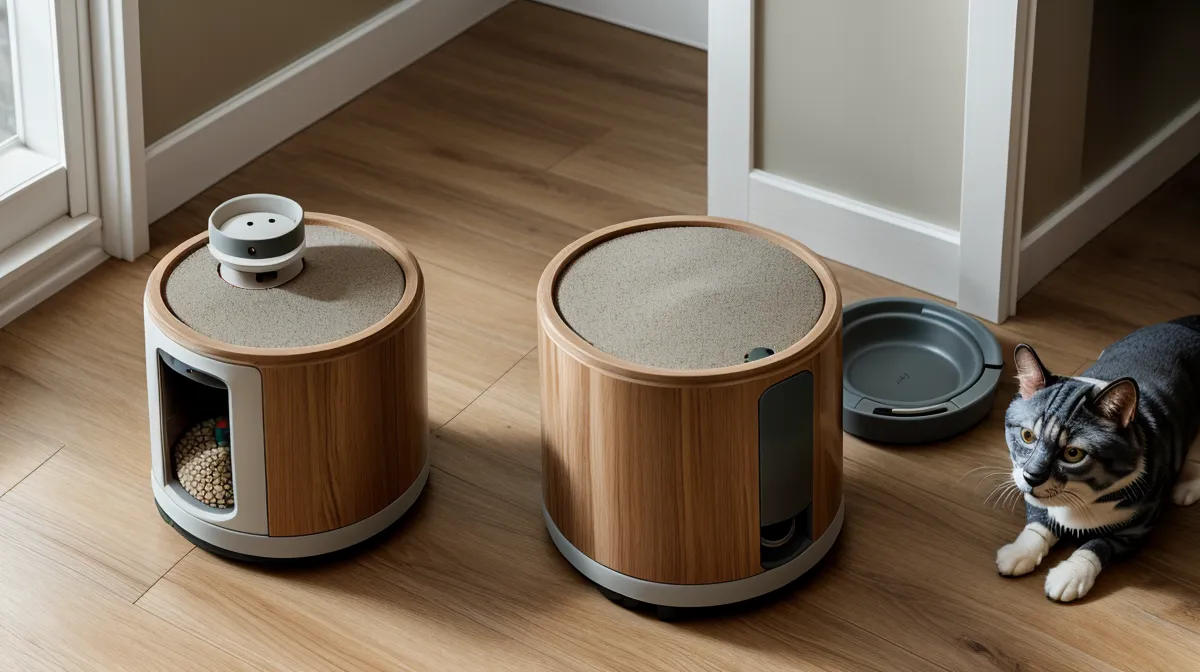
Hopper won't eat kibble once it's lost its crunch. It doesn't matter how hungry he is, he'll sniff the bowl, flick his tail, and walk off like I've personally wronged him. That's not a Petlibro Granary malfunction. That's a desiccant problem, and most people treat that little silica bag on a fixed calendar instead of paying attention to what it's actually doing. The box says swap it every 15 to 30 days. I believed that number for longer than I should have, right up until I learned that kibble freshness in a Lakewood apartment has a lot more to do with the weather outside than with a printed range on the packaging.
For a stretch last year, I had a neighbor swing by around lunch to check on the cats whenever a client call ran long — reliable for about two weeks, until she took a job in Phoenix and that whole arrangement went with her. Ever since, if something around here needs checking, I'm the one doing the checking, which turned out to be the entire argument against trusting a blinking light on a feeder lid.
The 15-to-30-Day Desiccant Replacement Window Isn't Actually a Deadline
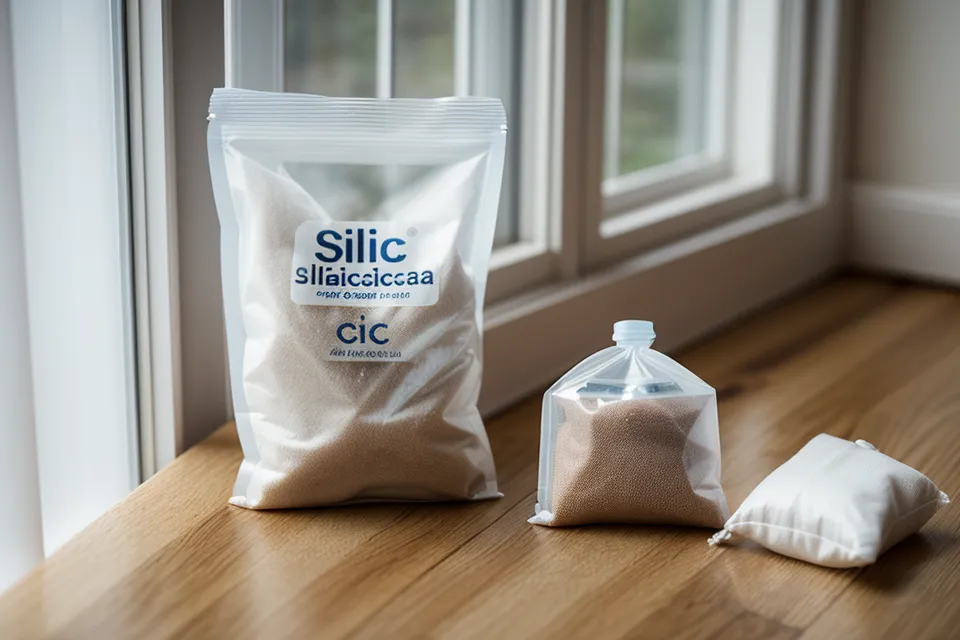
Pop the twist-lock lid on the Granary — mine's the 5L version — and you'll find a small carrier holding a bag of silica gel, the same stuff that comes stapled inside a shoebox with a warning not to eat it. Its whole job is pulling moisture out of the air inside the hopper before that moisture reaches the kibble. Those beads can absorb something like 40 percent of their own weight in water before they're spent, and once a bag hits that point, it stops being a shield and starts acting more like a moist little sponge sitting on top of your cat's dinner.
During what I still think of as my design deadlines and hungry cats phase, I just watched for the app's replace alert and trusted it without asking questions — which works fine until you remember that alert is only as reliable as whatever wifi connection happened to carry it that morning. The app has no idea whether your kitchen's been steaming up from a pasta pot or whether a Denver winter has turned your whole apartment into a convection oven set to "dry." It just counts days.
That's a different failure than the morning I walked in on the feeder motor still whirring away, bowl completely empty, Hopper just staring up at the chute like it owed him an explanation. That one's a portioning problem, solved by dialing in the feeding schedule itself, and it's got nothing to do with anything in this post.
The Real Culprit: Denver's Wild Humidity Swings
Denver's air doesn't sit still for long. I've watched cut basil wilt on the walk home from the Trader Joe's on Josephine Street in less time than it takes to reheat dinner, and a couple months later that same walk leaves my knuckles cracked from how dry the cold gets. That swing is exactly why a fixed replacement window never made sense to me.
In February, relative humidity around here can sit at 35 to 40 percent, which is about as dry as air gets without technically qualifying as a desert. Bags I pulled during that stretch still had that light, hollow rattle long past when the box's printed schedule said to toss them — swapping on schedule would've just meant throwing out a bag that still had plenty of work left. May tells a different story. A run of rainy days and Beans, my ragdoll mix, starts yelling through Zoom calls because the kibble's lost its snap — the same beads that held up fine through a dry stretch get overwhelmed fast once the air actually holds water. If you live somewhere genuinely humid — Florida, Seattle, wherever — that 15-day figure printed in the manual isn't the conservative end of a range. It's closer to a hard limit.
The Pinch Test Beats a Calendar
One bag felt heavy and clumped instead of grainy, and tapping it against the lid gave a dull thud instead of a rattle. That mismatch is the whole tell: the "replace" light on these feeders works exactly like the clean-filter light on a vacuum — sometimes it's screaming with the bin still half-empty, other times it stays dark while something's actually jammed inside. It's a timer wearing a sensor's job, and treating it like the real thing is the myth that keeps tripping people up.
Here's the actual test, and it takes about five seconds. Pull the bag out of the lid and pinch it. If it still feels like loose sand — individual grains sliding around — it goes back in. If it feels like a solid lump of damp clay, it goes in the trash, full stop, regardless of what day the calendar says. A saturated bag doesn't just quit helping, either; it can sit there holding moisture directly against the top layer of kibble, which is worse than having no desiccant in there at all. That's what real automatic feeder maintenance looks like — a physical check, not a countdown timer.
Check the Bag, Not the Clock
The worst version of this played out at the bottom of the hopper, not at the bowl. I let a saturated bag sit far longer than I should have during a humid stretch, and the moisture turned ordinary kibble dust into a sticky paste stuck to the plastic — like dried oatmeal welded to a countertop, except worse because it's under the food line where you can't see it without emptying the whole hopper. That's the domestic disaster the calendar-based swap doesn't warn you about.
If you're nervous about killing power to the unit while you deep-clean out that kind of mess, I already wrote about why my smart feeder needs a dumb battery backup, which covers what happens to your feeding schedule when the power blips mid-clean. That's a separate emergency from a spent desiccant bag, and it's worth keeping the two straight in your head.
I tried explaining the pinch test to Deena Portsmith once — an old coworker from my agency days who's gone freelance too, we still share a desk across town a couple days a week. She's got two kids and a goldfish, no cats at all, and she looked at me like I'd invented a new unit of measurement. Pet owners get it instantly. Everyone else just blinks.
My neighbor two floors up, Caulfield Rios, borrowed my spare Granary while his own feeder was getting fixed — restaurant hours mean a dependable early dispense matters more to him than it does to most people. He held onto the loaner well past when I expected it back, which tracks, he always runs a test longer than planned. When he finally handed it over, the bag inside was still doing real work, and it wasn't because he'd been counting days. He'd been doing his own pinch checks the whole time, same as me.
The rule that actually works has nothing to do with the printed window: in a dry stretch, a bag can keep going far longer than the box suggests, and in a wet one, it can tap out well before that window even opens. Pinch it before you trust the light, and swap it the second it stops feeling like sand. That's the whole system, and it's held up through every humidity swing Denver has thrown at it so far. Hopper and Beans haven't turned up their noses at a bowl since I started checking with my hands instead of watching a countdown.