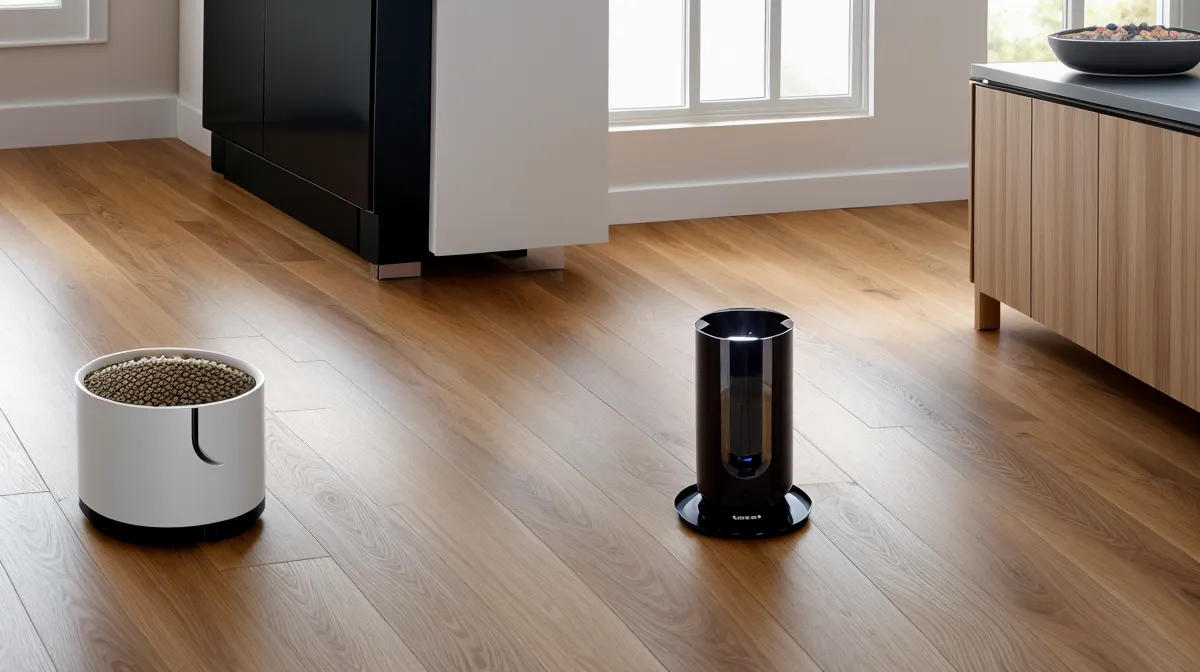
Late one evening, a Zoom call with a client in London stretches into its third hour, and I can practically feel the judgment through the screen—not from the client, but from the hallway. I glance at the cat cam on my second monitor, watching Hopper, my 9-year-old tabby, pace a tight circle near the feeder. He knows the schedule. I know the schedule. But my Wi-Fi is currently doing its best impression of a tired toddler, and I’m sitting there praying the local internal clock on the feeder holds, even if the 2.4GHz connection has completely ghosted me.
As a 36-year-old product designer working out of a one-bedroom rental here in suburban Denver, my living room has slowly evolved into a high-stakes hardware lab. I didn't set out to be a pet-tech stress-tester. But after a particularly nasty incident back in late 2023 where a jammed feeder left Beans, my ragdoll mix, screaming at an empty bowl for four hours while I was stuck in traffic, I stopped trusting marketing copy. Now, I buy the gear, I set it up, and I wait for it to fail. Because if a gadget is going to quit on me at 5,280 feet above sea level during a blizzard, I’d rather be there to see it happen than find out via a frantic meow at midnight.
The Redundancy Test: Why Your App Isn't a Safety Net
Most people buy a smart feeder because they want the convenience of a smartphone app. They want to hit a button from a coffee shop and hear that Pavlovian crunch of kibble hitting the bowl. But here’s the thing: an app is a luxury; a mechanical fail-safe is a necessity. When I started my long-term testing phase in mid-winter 2025, I realized that most of these devices are essentially just plastic boxes with a clock and a motor. If the power goes out, the 'smart' part of the feeder usually dies first.
During one snowy Tuesday last February, the power flickered just enough to reset my router. The feeder stayed on, thanks to the backup batteries, but the Wi-Fi didn't reconnect automatically. I spent the next hour watching the 'offline' status on my phone while trying to explain a UI prototype to a distracted stakeholder. This is where the math matters. Most of these units rely on D-cell battery power for backup, providing about 1.5V per cell. If your feeder doesn't have a local memory chip to store the schedule, that battery backup is just keeping a dead brain alive. It won't trigger the motor without the 'go' signal from a server that it can no longer reach.
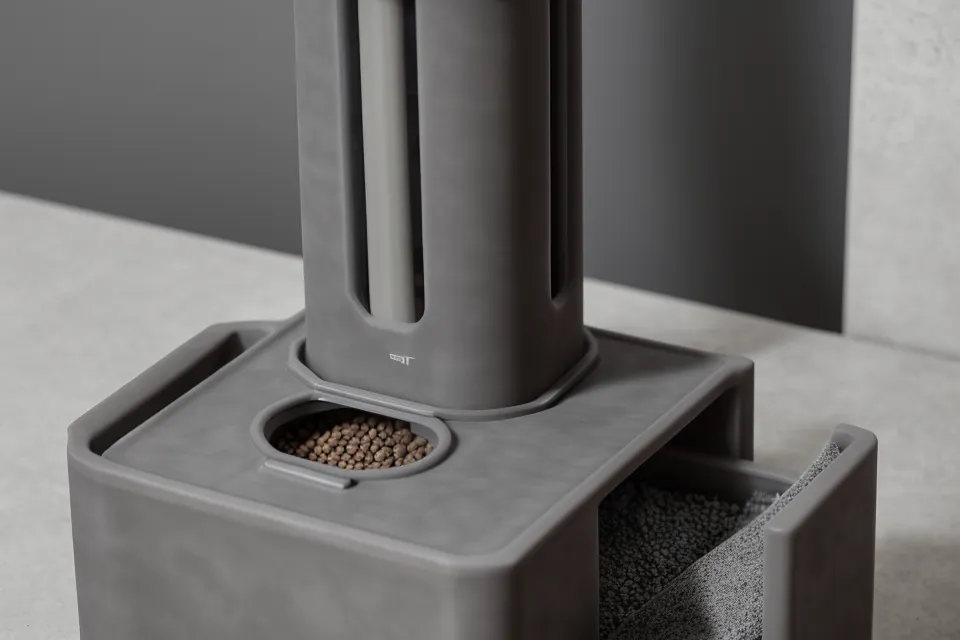
I’ve logged dozens of feeding cycles over the last few months, and the most reliable units are the ones that treat the 2.4GHz Wi-Fi band as an optional suggestion rather than a lifeline. You want a feeder that keeps its schedule in its own local 'head,' like a dishwasher that finishes its cycle even if you unplug the kitchen TV. After about four months of testing different models, I've found that the 4 liters capacity standard is the sweet spot for a two-cat household. It’s enough to last a few days without the food getting stale in our dry Colorado air, but small enough that the motor doesn't strain against the weight of the kibble.
The Summer Storm Turning Point
The real test of my setup came in late July during a heatwave. A massive afternoon thunderstorm—the kind that turns the Denver sky a bruised purple—knocked out a transformer on my block. I was forty minutes away, white-knuckling the steering wheel in a crawl of traffic on I-25, watching my phone screen glow with a 'device offline' notification. That sinking feeling in my chest was worse than any client rejection. I could picture Hopper and Beans sitting in the dark, wondering why the food-god had forsaken them.
But when I finally walked through the door, the apartment was pitch black except for the faint, rhythmic 'tink-tink-tink' of kibble hitting a stainless steel bowl. The power was still out, the Wi-Fi was a memory, but the backup batteries had kicked in. The internal timer had fired right on the second. It was a sensory relief that I can’t quite describe—that sound of hardware doing exactly what it was designed to do when the world around it fails. It turns out I actually put together a bit of a guide on how these things handle our spotty Denver grid based on that specific week of outages.
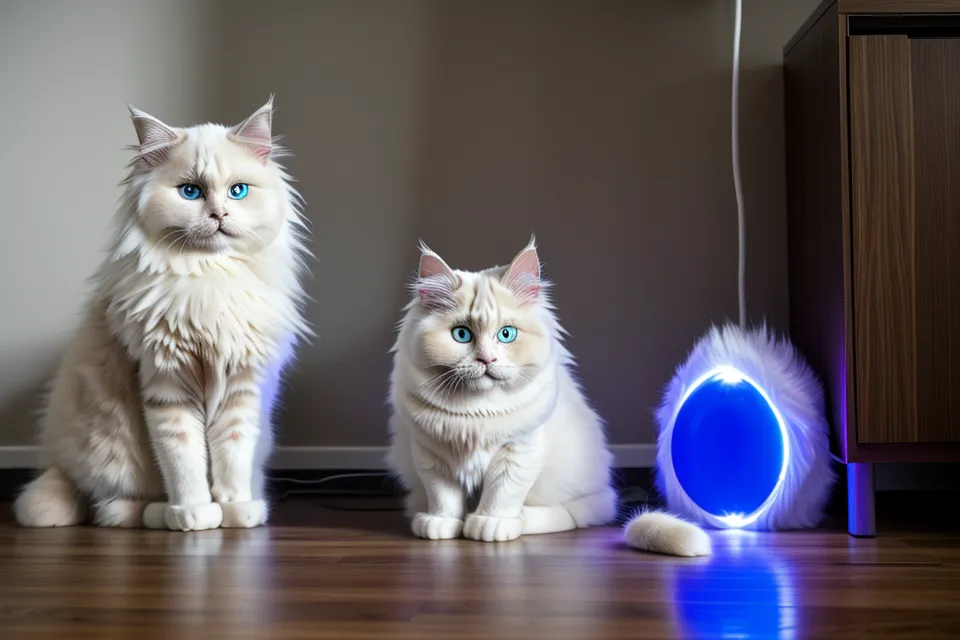
What I realized during that outage, however, wasn't just about the batteries. It was about the cats. While the feeder did its job, Beans, the ragdoll mix, was unusually frantic when I walked in. Ragdolls are often called 'puppy cats' because they’re so attached to their humans, and I started noticing a pattern: the more I relied on the automated system to handle the 'tactile' parts of our day, the more his separation anxiety seemed to spike. He wasn't just hungry for kibble; he was hungry for the ritual of the scoop and the short conversation we usually have at 6:00 PM.
The Hidden Cost of Automation: Separation Anxiety
This is the part the tech companies don't put on the box. Automated feeders are amazing for reliability, but they can actually increase separation anxiety in high-attachment breeds by removing the pet's tactile interaction with their owner during mealtime rituals. For a cat like Beans, the feeder is a cold, indifferent robot. When I’m home, he now stares at the machine instead of me, or he’ll follow me from room to room with a weird intensity, as if he’s trying to make up for the lost 'face time' at the bowl.
I’ve had to adjust my strategy. I use the automation for the 'deadlines run late' nights and the early morning 'let me sleep until 7' feedings. But for the main event, I make sure I’m the one putting the food down when I can. It’s about balance. You want the tech to be your safety net, not your replacement. If you’re looking at these gadgets, don't just look for the highest app rating; look for the one with the most boring, robust battery compartment and a physical log you can check when you get home.
True pet tech isn't about the fancy UI or the ability to record a 'come and get it' voice memo that sounds like a haunted radio station. It’s about the mechanical fail-safes that work when the internet is down and you're stuck on the highway. Hopper and Beans are fed, the 1.5V batteries are still holding strong, and I can finally close my laptop and give them the attention the machine can't provide. If you're currently in the middle of a design crunch and worrying about your own cats, you might find some peace of mind in my notes on designing a feeding routine that actually survives a Denver deadline without breaking your cats' spirits.
Mid-afternoon during a power flicker is the worst time to realize your backup system is just for show. Take it from someone who has spent the last year treating his one-bedroom apartment like a QA department: test the batteries, ignore the 'instant' snack buttons, and remember that no matter how smart the feeder is, you’re still the one they’re actually waiting for.