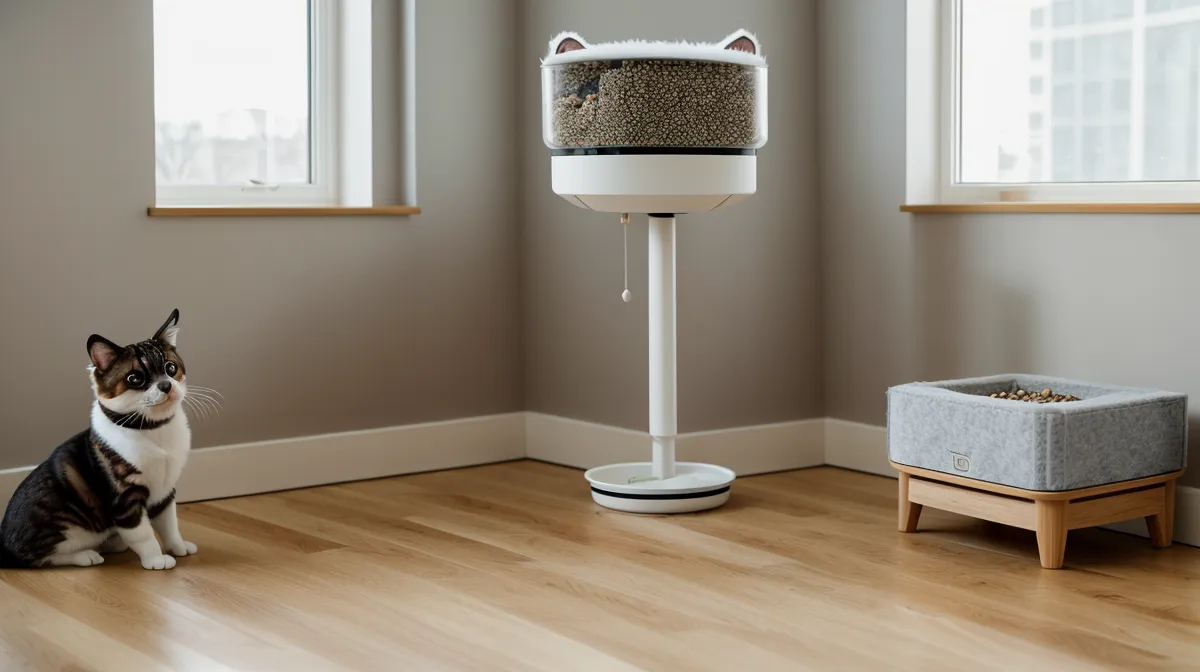
One evening last month, I was deep in a Figma file for a client when the familiar whir of the Petkit feeder echoed from the kitchen. No screaming cats, no interrupted Zoom call, just the sound of a system working while I couldn't move. It was well after dark, the kind of hour where my neck usually starts to lock up from leaning into the monitor, but that sound meant one less thing on my plate.
Before we get into the weeds, a quick disclosure: a few of the pet brands on this site send me a commission when you click through one of my links and buy—so yes, I earn a commission, though your price stays the same. The gear here gets bought out of pocket first, lived with for weeks, then either stays in the apartment or goes back. Brands that drop their affiliate program later still keep the recommendation if Hopper and Beans approved of the product.
The Ghost of Feeders Past
As a freelance product designer here in suburban Denver, my schedule isn't so much a schedule as it is a series of polite suggestions from clients that I eventually ignore to finish a prototype. Living in a one-bedroom rental with a 9-year-old tabby named Hopper and a 4-year-old ragdoll mix named Beans means I am never truly alone, especially when the clock hits dinner time. If you’ve ever had a hungry cat stare at you while you’re trying to explain UX flow to a stakeholder, you know it’s a level of psychological warfare most people aren't prepared for.
I started buying smart pet gear back in 2023 after coming home to a jammed automatic feeder and a furious cat for the third time. A feeder jamming is exactly like a stuck dishwasher; you don't realize how much you rely on it until you're standing in a puddle or, in my case, being screamed at by a 12-pound tabby. That 'Great Jam' led to my current policy: I buy, set up, and stress-test everything before it gets a permanent spot in the kitchen. I need my gear to be as reliable as my prototypes, because a hungry cat is an unavoidable critic in a small apartment.
The 2.4GHz Battle and the Initial Setup
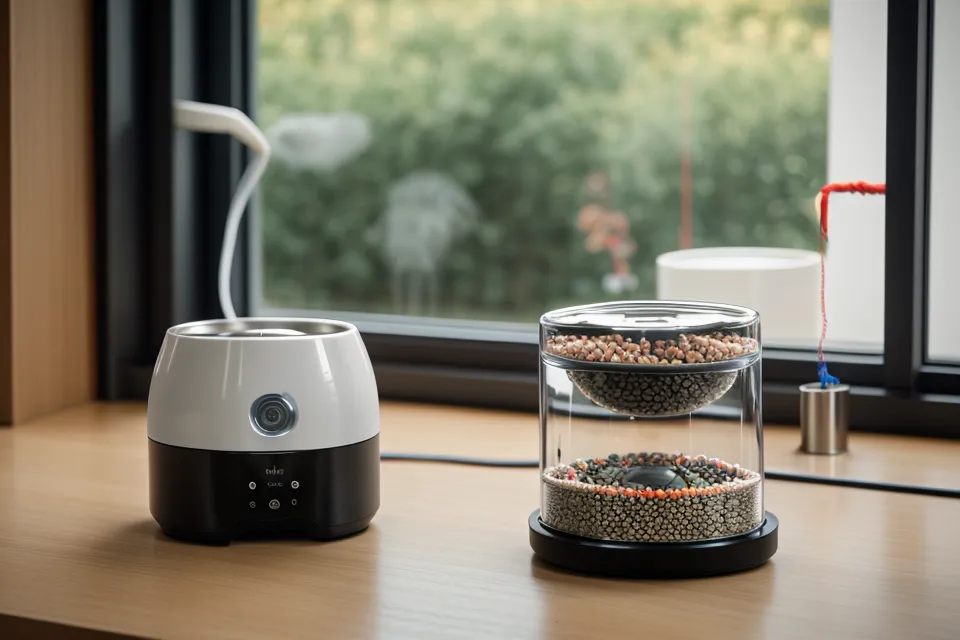
I started this specific testing phase in early May, bringing the Petkit into the mix. Setting up smart gear should be simple, but as a designer, I know 'simple' is usually a lie told by marketing. I spent twenty minutes staring at my router settings, frustrated that the feeder wouldn't pair, only to realize I was trying to force it onto my 5GHz guest network. Most smart pet feeders require a 2.4GHz Wi-Fi band because it has a longer range and better wall penetration than 5GHz. It’s the kind of technical hurdle that makes non-techie pet parents want to throw the device out a window.
Once I actually paid attention to the requirements, the Petkit (which carries an average user rating of 4.4) synced up. But Hopper watched the whole process with judgmental whiskers. He’s seen feeders come and go. He remembers the budget models that would drop a meal forty minutes late or skip it entirely if the Wi-Fi flickered. For him, the sound of the feeder is the only metric that matters. I’ve learned that when meetings run late, the reliability of that connection is the only thing standing between me and a shredded sofa.
The Multi-Pet Strategy: Managing the Roommate Dynamic
The biggest challenge in a two-cat household isn't just dropping the food; it's making sure the right cat eats it. Hopper is nine and has the metabolism of a sedentary rock. Beans is four, a ragdoll mix, and believes all food in the apartment belongs to her by divine right. Standard automated feeders usually focus on portion control for a single pet, which is a disaster for multi-pet households with varying dietary requirements. If I just dump a pile of kibble, Beans will vacuum up Hopper’s portion before he even realizes the 'ping' has happened.
I’ve had to get creative. I use the Maven Pet tracker to keep an eye on their activity levels, which helps me adjust their portions in the Petkit app. If Beans has been doing zoomies all afternoon while I’m in a design sprint, I know she’s going to be extra prowly at the feeder. The Maven activity tracker actually surfaces real behavior changes my vet later confirmed, which is a nice bit of data to have when you're trying to prevent resource guarding. I also keep a stash of grooming supplies from Revival Animal Health on hand, because a stressed-out Hopper tends to over-groom when Beans gets too pushy about the food bowl.
During the first six weeks of this setup, I noticed a specific, metallic 'ping' of high-quality kibble hitting the stainless steel bowl. It’s a sound that Beans can hear from a dead sleep in the other room. Stainless steel bowls are recommended by many experts to prevent feline acne, as plastic can harbor bacteria in microscopic scratches, and they also provide that unmistakable dinner bell sound that keeps the cats focused on the bowl rather than my ankles.
The Thunderstorm Test: Late August in Denver
The real turning point for this system came during a sudden power flicker during a late-summer Denver thunderstorm. I was in the middle of a particularly grueling client feedback session—the kind where everyone has a different opinion on the shade of blue I used—when the lights in my home office dipped. My desk lamps died, and my router rebooted. Usually, this would be the moment I’d start sweating, knowing the cats were about to miss their 6:00 PM feeding.
But the Petkit has a battery backup. While my professional life was flickering, the dinner routine didn't skip a beat. I felt the physical release of tension in my neck when my watch buzzed with a feeding confirmation notification. It’s a small thing, but how my smart feeders handled a power outage while I was stuck in that meeting proved the value of the redundant hardware. The push notification arrived within seconds of the drop, not the 30-minute lag I’ve experienced with cheaper brands like some Petlibro models I’ve tested in the past.
Reflections from the Design Desk
By mid-autumn, this routine had become invisible, which is the highest compliment I can give to any product. I no longer feel the 'freelancer guilt' when a meeting runs long. I know that even if I’m stuck explaining a grid system to a distracted VP, Hopper and Beans are being fed on a schedule that respects their crepuscular nature—those peaks of energy at dawn and dusk that always seem to align with my most stressful work hours.
I’ve spent the last six months stress-testing this combination of the Petkit feeder and the Maven tracker, and it’s the first time I haven't had to keep a 'backup' manual bowl hidden in the pantry just in case. Looking at Hopper sometimes, I have the inner monologue of: 'You have no idea how much engineering went into making sure you don't have to wait ten minutes for breakfast.' He doesn't care about the 2.4GHz band or the battery backup; he just cares that the kibble hits the steel.
If you're a fellow freelancer or just someone whose boss doesn't understand the concept of 5:00 PM, I’d suggest looking into a system with a solid battery backup and an app that doesn't lie to you. You can check out the current price for the Petkit on their site—it changes depending on sales, but the peace of mind is pretty consistent. It’s much better than coming home to a furious cat and a jammed machine.