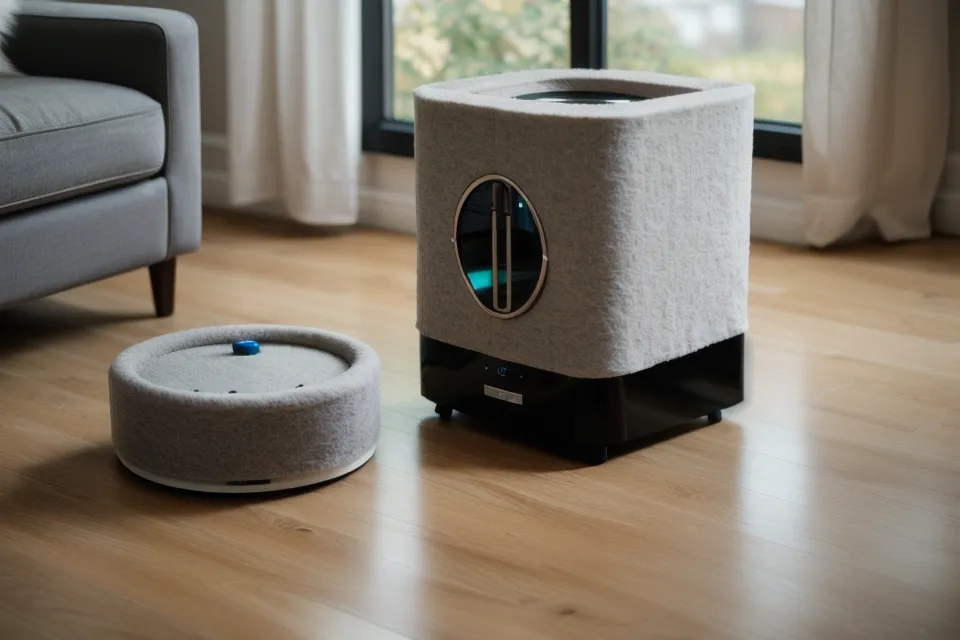
The dial on that first automatic feeder freezes half a turn short of dropping breakfast, the drum grinding against a jam of kibble like a dishwasher stuck mid-cycle while both cats sit there staring at an empty bowl like it owes them money. It skips two meals before I catch on, mid-way through a stretch of back-to-back client calls, and by the time I notice, Hopper has started treating the kitchen baseboard as a percussion instrument, with enough of his fur on my keyboard within the hour to prove he means it. That single failure is what turned pet-tech from a convenience purchase into something I stress-test the way I'd stress-test a client's prototype: assume it breaks, then find out exactly how.
Quick note before any brand name shows up: a few of the pet-tech brands linked on this page pay me a small commission if you click through and buy, and it doesn't change what you pay. I buy the gear myself, run it through a real two-cat household, and only keep a link live if it actually holds up. A brand can drop its affiliate program tomorrow and still stay on this page if the cats liked what it did.
Why One Bad Automatic Feeder Changes How You Shop
Cats are crepuscular, so Hopper and Beans want breakfast and dinner exactly when I'm elbow-deep in a deadline or stuck on a client call that ran forty minutes past its slot. A jammed dial feeder doesn't just miss a meal, it misses the one meal that matters, at the hour I can't step away from a laptop to fix it by hand. That's what turned this corner of my smart-home setup into an actual testing habit instead of a one-and-done purchase, and it's why the first automatic feeder I bought on purpose, rather than out of panic, was the Petkit.
What the Battery Backup Buys a Smart-Home Feeder
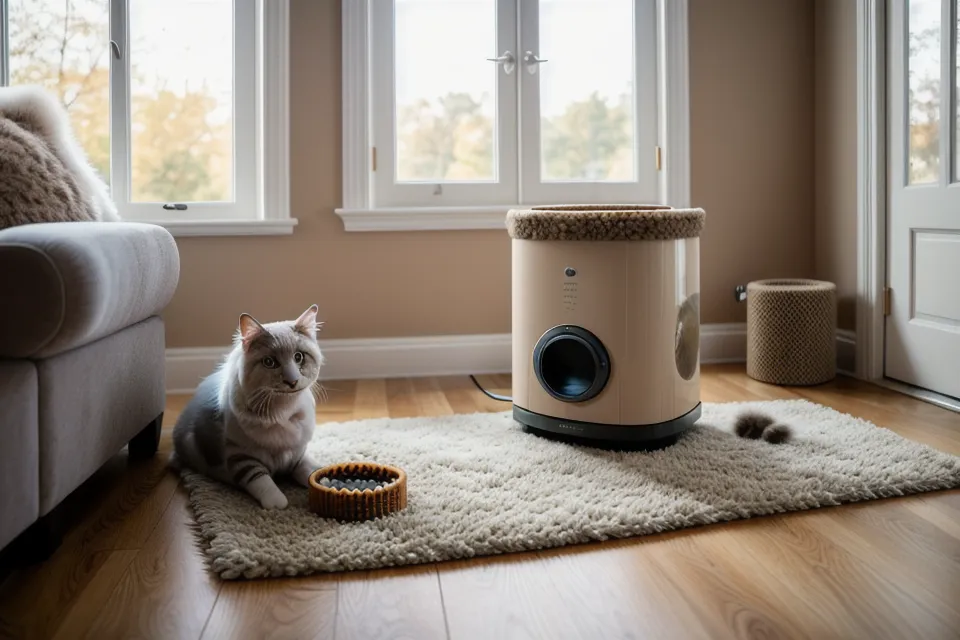
Setup on the Petkit is fussier than it needs to be. The app assumes you already know what 2.4GHz means, and mine refused to pair until I dug through router settings and forced the band back down manually. But the real payoff shows up during outages, not demos. Power drops mid-afternoon during a spring storm, my home Wi-Fi goes down with it, and the feeder keeps dispensing on its own schedule and its own battery, no network required once that schedule is already loaded. The charging brick for that backup battery runs warm enough overnight that I catch a faint metallic tang some mornings walking past, a small reminder something back there never fully shuts off. And the gap between a flaky radio and a solid one stops being an abstract spec the moment your feeder drops off the network mid-storm and you're the one refreshing an app from across town, hoping.
Weighing Portion Accuracy Against the Multi-Cat Standoff
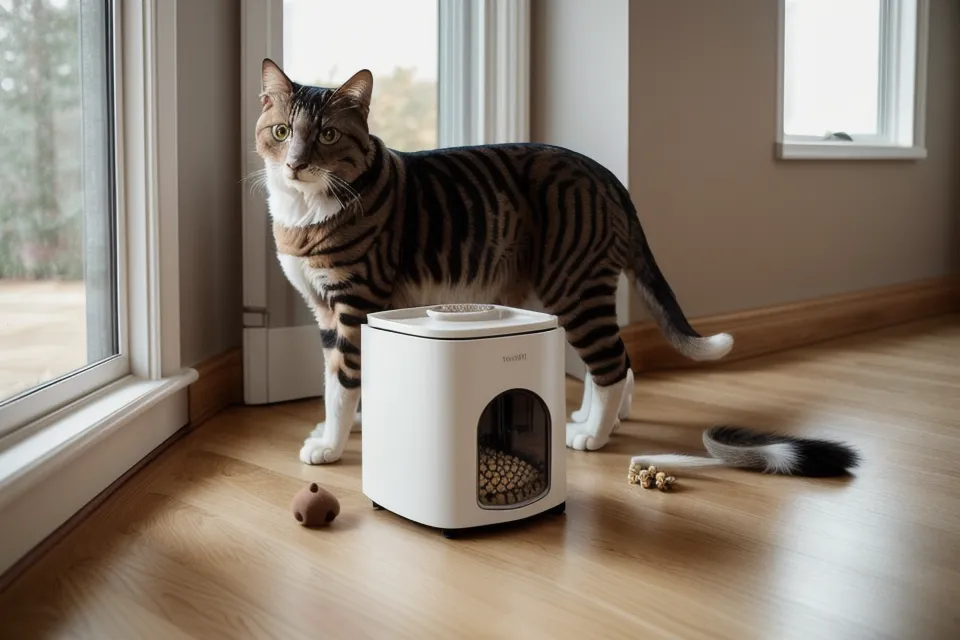
None of the glossy product photos mention resource guarding, but it's the first thing you notice about real cat-care once one feeder replaces two separate bowls in a two-cat home. Hopper, older and pushier, decided early that the tray was his territory, and Beans learned to hang back until he wandered off. A friend of mine fosters rescue dogs through the Denver Dumb Friends League and says most of what goes wrong in a multi-animal house comes down to temperament, not equipment, and watching this feeder handle two very different appetites made me believe her. Staggering smaller portions across the day instead of two big drops took the edge off the standoff, and I leaned on the How to Set Up an Automatic Cat Feeding Schedule for Long Workdays guide to get that timing right. Portion accuracy matters more here than it would with one cat: drift by even a little and you either overfeed the pushy one or underfeed the patient one, and the Petkit held its measurements steady enough across repeated feedings that I stopped weighing bowls by hand to check it. The tray is also just harder to bully open than a basic gravity feeder, which matters once a food-motivated cat starts treating the lid as a puzzle instead of a boundary.
Is the Cheaper Feeder Actually Cutting Corners?
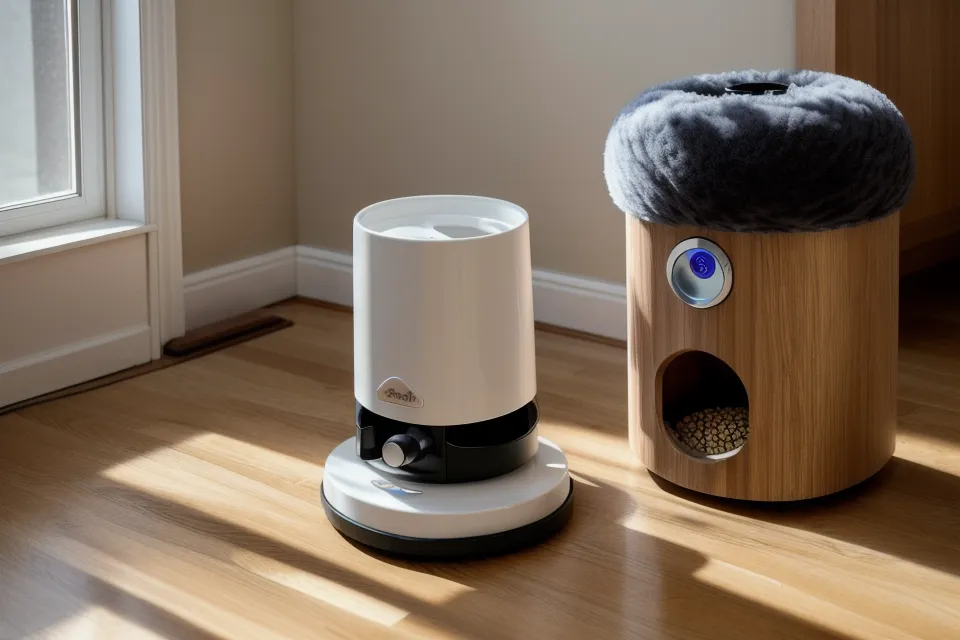
Price is where this gets interesting, because the Petlibro costs roughly half what the Petkit does and its portioning was just as accurate in side-by-side testing, gram for gram. The trade-off shows up in the network layer instead. Wi-Fi drops the moment the router sits more than a couple of walls away, and push notifications occasionally arrive thirty to sixty minutes after the fact, which defeats the point of a phone alert if you're actually trying to confirm a meal landed. The app interface feels like it was designed for a different decade too, with too many settings crammed onto one screen. I put a fuller feature-by-feature breakdown in my Petkit vs Petlibro comparison, but the short version holds: Petlibro earns its price when your router sits close and you don't need instant confirmation, and it loses that edge the moment either of those stops being true.
The Wet-Food Side Nobody Puts on the Box
Neither of these two was built with wet food as the priority, and that's its own separate rabbit hole. One wet-food add-on I tried briefly runs off an ice pack that's usually gone warm by noon, and you can smell it before you're even through the door, which tells you everything about why I stuck to dry kibble for this particular comparison. Dry storage carries its own small maintenance tax too, since the desiccant packs inside the hopper need swapping on a schedule or the kibble starts smelling stale before the bag's even half empty, though that's a deeper topic than this piece has room for. For anyone who wants harder data than a feeding log, activity trackers like Maven Pet claim to flag appetite or energy changes before a person would notice them, though I haven't run that gear through the same long-absence testing yet. I've folded all of it into a broader stress-tested guide to reliable pet tech for anyone who wants the whole apartment setup instead of just the feeder half.

Choosing Between Petkit and Petlibro
Here's where the weighing actually lands, once reliability gets stacked against cost instead of just specs on a page. Choose the Petkit when your router is nowhere near the kitchen, when a feeder has already failed you during a power blip, or when you're managing more than one cat and can't afford the tray running out of sync. Choose the Petlibro when your setup is simpler, one cat, a router close enough to reach without trouble, and saving roughly half the cost matters more than paying for redundancy you might never use. Neither is cutting corners exactly, they're built for different apartments and different tolerances for risk. Whatever cheap dial feeder got you searching in the first place probably earned its spot in a donation box, not a second chance.