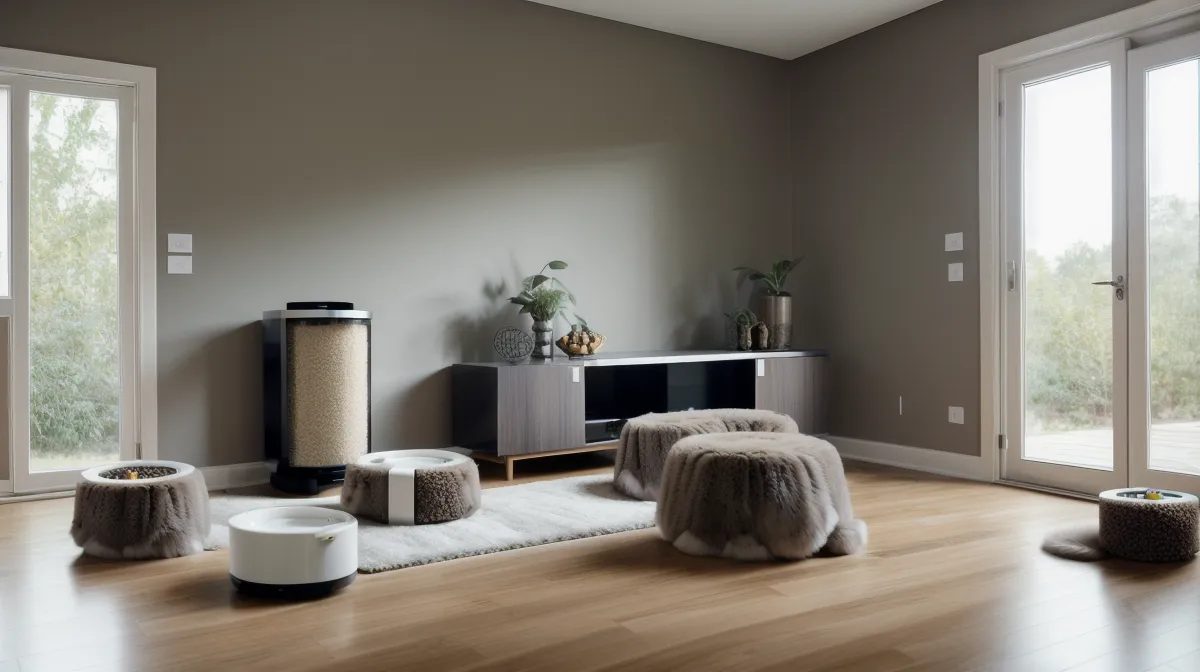
Three helpings of dry food came down in one long pour that morning, and Hopper didn't pause between bites. That was the gravity feeder I'd bought first, the kind that measures portions by weight without knowing two cats lean on it from different angles. The moment Hopper rested his front paws against the chute to reach the last few pieces, the mechanism read an empty tray and dumped another round. He ate all three servings hunched over the bowl, looking pleased with himself, because he'd found a loophole and I hadn't noticed yet.
That single failure is what pushed me toward RFID-selective feeders instead of anything gravity-fed or timer-based. It had nothing to do with Beans yet. I just needed a machine that knew it had already fed the cat standing in front of it. In a one-bedroom apartment near Denver, there's no spare room to solve a feeding problem by separating the cats physically, so the fix had to happen at the bowl itself. Beans finishing off Hopper's bowl on top of his own turned out to be a separate problem the same setup ended up solving.
Why RFID Beats a Gravity Chute for Multi-Cat Feeding
Most vets already inject a microchip that meets the ISO 11784/11785 standard, and RFID-selective feeders read that same chip instead of scanning a whole cat. The lid stays locked until it recognizes the signal from the cat who's allowed in, then it releases. Think of it as a key fob for the food bowl instead of a lock any cat with paws and patience can defeat.
Beans is easily fifteen pounds of ragdoll muscle, and without something reading actual identity instead of just motion, he treats any bowl within reach as fair game. Multi-cat feeding only works when the hardware can tell the two of them apart, and a gravity chute or a timer has no way to do that. Look, a timer just dumps food on a schedule. It doesn't know who showed up.
Getting a Cat to Trust a Box That Clicks at It
Hopper is the cautious one, nine years old and suspicious of anything that hums or clicks near his food. The infrared sensor makes a small click every time it fires, and his first several visits ended with him backing three steps away like the bowl had lunged at him. Training mode itself is simple: treat lure, cat walks under the sensor, feeder logs the chip. Convincing a nervous tabby that the click means dinner and not danger is the part nobody warns you about.
Three years of running this kind of gear through a real apartment with real cats taught me not to rush that step. Force it and you get a cat who avoids the feeder altogether, which defeats the whole point of buying one. And if you're setting one of these up for the first time, the sequence in Building a Fail-Safe Multi-Cat Feeding Station goes deeper into training order than I will here, since dialing in exact portion sizes per cat is really its own project and not something I'm covering in this one.
What Happens When the Backup Tag Meets a Water Bowl?
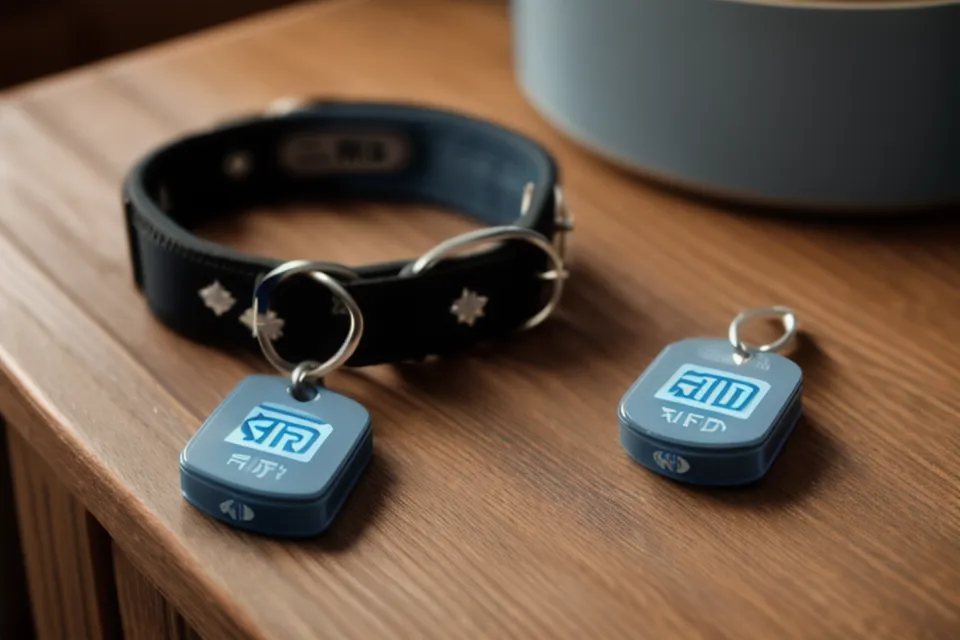
One morning the feeder wouldn't open for Hopper at all, and neither the Wi-Fi nor the batteries were at fault. Beans had wrestled with him the night before, pawed the backup RFID tag clean off his collar, and knocked it into the water fountain. A soaked tag doesn't broadcast anything. The internal microchip kept working fine since it sits sealed under the skin, but the clip-on backup turned out to be the piece not worth trusting.
My neighbor Clint, who spends his weekends taking apart dead electronics for fun, took one look at the corroded tag contacts and told me water and cheap RFID hardware never mix for long. A power flicker can do similar damage to a feeding schedule, which is worth checking against the notes in battery backup reliability before assuming a feeder keeps running through an outage on its own. What Denver's hard water eventually does to a fountain filter is a whole separate mess I won't get into here.
The Tailgating Move Most Feeders Never Catch
Beans found a workaround that had nothing to do with chips or signals at all. Sneaky, honestly. He'd wait for Hopper to unlock the lid, then wedge his head in from the side before it sealed. The sensor still read a cat in front of the bowl and kept it open, and it had no way of knowing which cat that was. Because Beans outweighs Hopper by several pounds, he can lean him out of position the second he's in.
Fixing it took two changes: setting the lid's closing speed to instant instead of the gradual default, and moving the whole station into a corner where nothing could approach from the side. That second part matters more than people expect, and it's exactly the kind of layout problem covered in organizing a pet feeding station in small apartment rental kitchens. A reader named Suki, who turns every recommendation I make into her own comparison spreadsheet, asked me this same tailgating question about her two tabbies not long ago, and corner placement was the whole answer.
The Limits of This Setup
None of this solves every feeder problem out there. A cat determined to pry the lid open by force is a tamper-proofing question, not a chip-reading one. Running two completely different diets through microchip feeders is a bigger setup than mine, since I'm only keeping one bowl exclusive rather than managing separate meals. Wet food would turn this into a different reliability problem entirely, since spoilage runs on its own clock regardless of who's allowed at the bowl.
A dispensing wheel jamming halfway through a meal, an app log that doesn't match what's actually in the bowl, or a feeder trying to keep working when the Wi-Fi drops out completely are all separate failure modes from the one I've walked through here. Denver's dry air doing a number on food sitting in the hopper is its own freshness issue on top of everything else. Cat hair on this keyboard the whole time I wrote this. Occupational hazard of the job. What actually matters for a Beans-and-Hopper situation is simpler: if your two cats differ by more than a few pounds, corner placement and an instant-close lid aren't optional extras. They're the difference between the RFID chip doing its job and a bigger cat finding the loophole anyway.