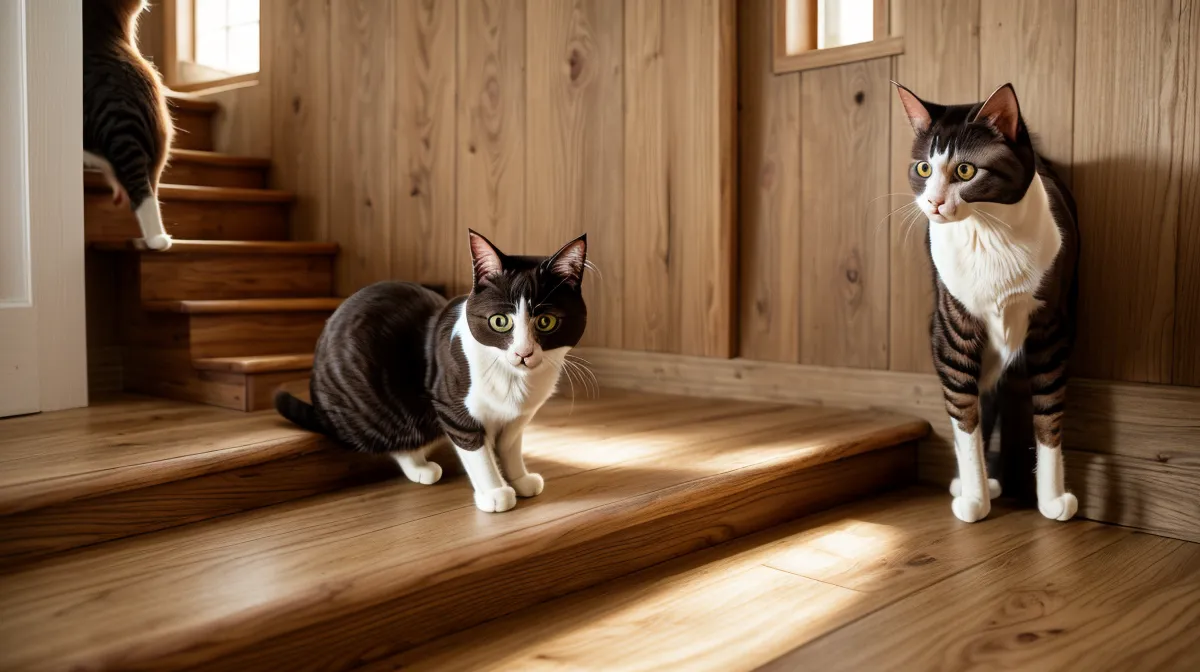
One evening after a freelance client deck review ran past dinner, I walked into the living room to find Hopper cornered under an armchair, his ears pinned back while Beans held the single floor scratcher hostage like a broken dishwasher nobody could touch. In a one-bedroom rental, floor space runs out fast.
Before diving into the wall anchors, a quick heads-up: a few pet gear companies send me an affiliate commission if you purchase through my links, at no extra cost to you. I earn a commission on qualifying gear, but every bracket, bolt, and feeder in this apartment is bought out of my own pocket, stress-tested through brutal work sprints, and tossed if it fails the cats.
If you're dealing with evening turf battles in tight quarters and want the short version: pairing a modular climbing shelf route with a reliable automated meal hub like the Petkit automated feeding system completely broke Hopper and Beans of their 6 PM hallway standoffs. But mounting heavy shelves to rental drywall without losing your security deposit takes some real planning.
The Rental Constraint: Studs, Drywall, and Big Cats
Back in late winter, my living room floor was a crowded obstacle course. I had a water fountain, two litter boxes tucked around corners, and a couple of automatic feeders. When tension flared between a nine-year-old tabby who just wants quiet and a four-year-old Ragdoll mix who bounces off furniture, the floor became a dead end.
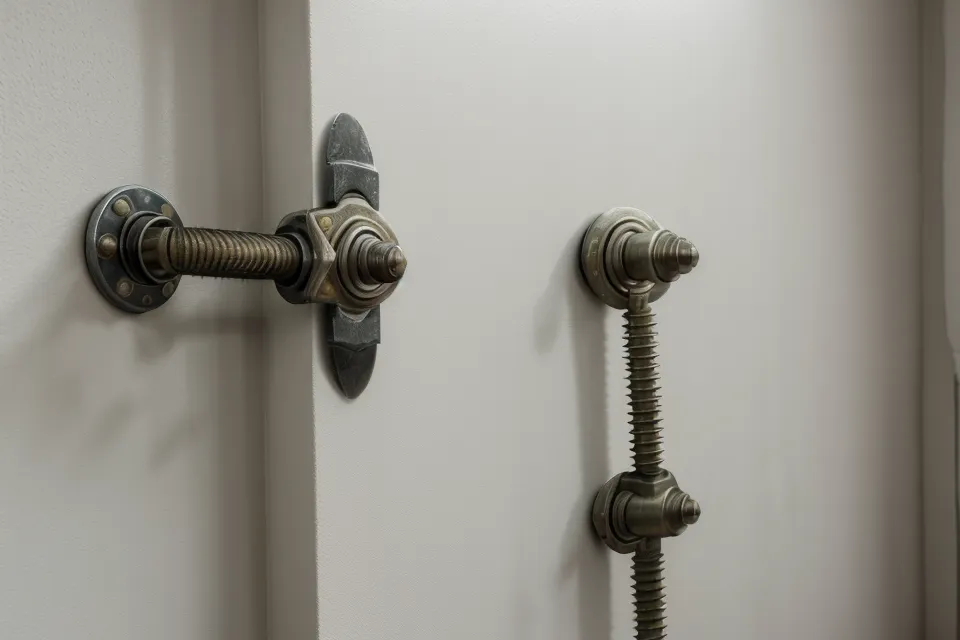
The obvious design fix was going vertical. But in a suburban Denver rental, you cannot just drive lag bolts into whatever drywall looks convenient. US residential construction typically uses standard wall stud spacing of 16 inches on center, covered with 0.5 inches of standard gypsum drywall. If you miss that stud and rely on the cheap ribbed plastic plugs that come packed in the box with most pet shelves, you are setting a trap.
Beans sits right in the typical adult male Ragdoll weight range of 15 to 20 pounds. When fifteen pounds of muscle leaps three feet off a sofa arm onto a narrow perch, it does not exert a static load. It acts like a cast-iron skillet dropped from shoulder height. After about three weeks of testing our first run, I noticed the drywall around a plastic anchor beginning to powder and flex. That was the moment I stripped the stock hardware and switched entirely to heavy-duty toggle bolts wherever a stud was out of reach.
Traction, Cushioning, and Hopper's Strike
Building the climbing run revealed our next mistake: bare wood. Many trendy aesthetic wall perches arrive as beautifully sanded, varnished pine. To human eyes, it looks minimalist and clean. To a nine-year-old senior tabby with slightly stiff hocks, it feels like an iced-over driveway.
Hopper refused to touch the upper tiers. He would sit at the base of the sofa, look up at Beans lounging overhead, and let out that pathetic half-meow he reserves for empty food bowls. Traction is everything. We solved it by affixing textured mats, eventually adding thick orthopedic resting pads from FunnyFuzzy along the widest horizontal shelf. Having that dense, supportive foam gave Hopper the grip he needed to scramble up without slipping, while Beans promptly claimed the padded top tier as his midday observation deck.
To make sure the vertical layout wasn't creating blind spots around their meals, I checked their movement patterns against my daily logs. It turns out that cats need clear lines of sight from their perches down to their resources. If you're designing a tight floor plan, you might also want to look at my guide on The Long-Meeting Failsafe: Building a Redundant Feeding Station for Two Cats to see how we position bowls relative to high-traffic runways.
The Turning Point: Launch Trajectories and Flying Kibble
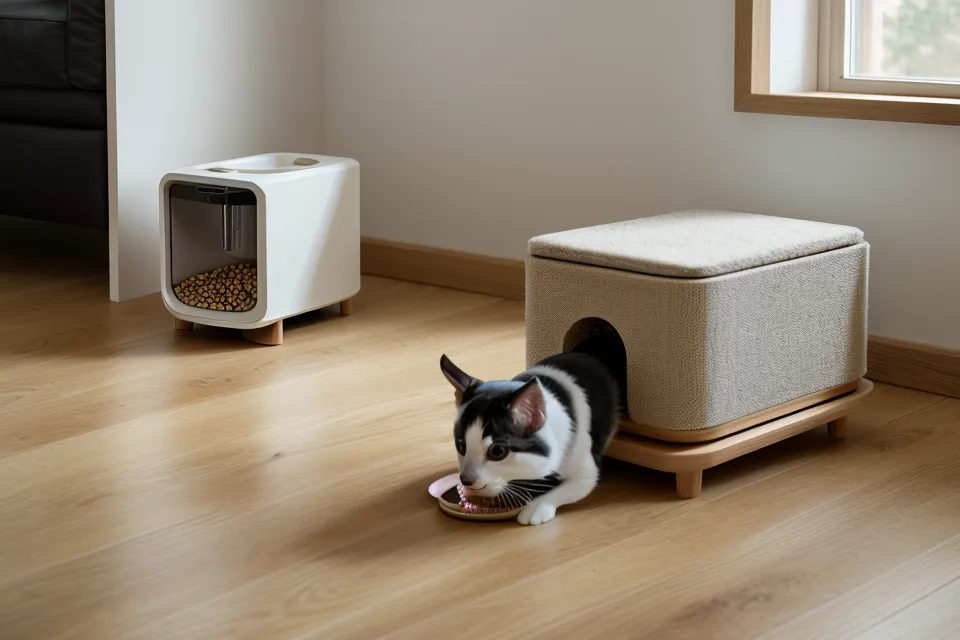
By mid-summer, the shelves were heavily trafficked, but a new design flaw emerged. Cats do not take gentle, polite routes when dinnertime approaches. One rainy evening last month, a design review dragged into its fourth hour. Beans heard the mechanical chime of our feeder from across the room.
Instead of taking the three-step tiered descent down the wall, he used the middle perch as a springboard and launched himself directly toward the dining corner. His rear paws kicked hard off the shelf—testing our toggle anchors to their absolute limit—and landed square against the top lid of our kibble dispenser. A cheaper plastic feeder would have snapped its hopper clips or spilled twenty portions across the rug. Thankfully, the stainless build and locking lid on our Petkit setup took the direct hit without popping loose.
That impact forced an immediate layout change. You never want a cat shelf exit trajectory pointing straight at food bowls or water stations. If you run cordless bubblers in tight corners, like those covered in our test of battery operated cat fountains for areas without wall outlets, a heavy cat landing nearby can send water sloshing across your baseboards. We rearranged the bottom perches into an L-shaped switchback that forced both cats to step down onto an intermediate console table before reaching the floor.
I also monitored Beans' daily activity levels through the collar tag from Maven Pet, which showed a steady uptick in his afternoon sprint intervals once the switchback route was finalized. Having actual tracking data confirmed that vertical territory gave him an athletic outlet during my work blocks rather than pent-up frustration.
The Modular Rental Tradeoff
There is a real design tradeoff you have to accept when outfitting an apartment wall. A lot of pet owners buy fixed-width, all-in-one cat climbing bridges because they seem simpler to screw into the wall once and forget. But standard wall studs are fixed at 16 inches apart, while rental room corners and doorway clearances are rarely arranged in neat multiples of sixteen.
Modular wall-mounted systems offer far greater long-term scalability than fixed-width units, despite requiring more complex initial wall damage remediation upon apartment move-out. With individual modular perches, you can place your primary load-bearing brackets directly into studs, use heavy toggle bolts for the lighter stepping pads, and wrap paths around strange apartment quirks like thermostat housings or air returns. Yes, you will spend an afternoon with spackle, sandpaper, and a putty knife when your lease ends. But during the years you actually live there, your walls will stay structurally sound, and your cats won't hit dead ends in the hallway.
For routine maintenance like wiping down paw grease, vacuuming shelf felt, or stocking up on cleaning wipes, I keep a recurring bulk supply from Revival Animal Health in the hallway closet so wall upkeep feels like doing the dinner dishes rather than a major renovation.
Comparing the Top Apartment Cat Gear
Here is how the key pieces from this setup stack up for apartment durability, based on daily wear across our seven-month test run. Check each manufacturer's page for current pricing and updated bundle options.
If you also have a multi-tier setup and want an affordable secondary station in a bedroom or hallway, the dispensers and fountains from Petlibro offer great everyday value to keep hydration stations separate from high-speed landing zones.
Reclaiming vertical wall space finally solved the floor-level territory friction between Hopper and Beans. Now, when a client presentation stretches well past dark, I no longer have to check living room cameras with dread or worry about frantic turf scuffles while kibble dispenses below.
| Product | Rating | |
|---|---|---|
| Petkit Top Pick | 9.1 | Read More → |
| FunnyFuzzy | 8.7 | Read More → |
| Maven Pet | 8.4 | Read More → |
| Petlibro | 8.2 | Read More → |
| Revival Animal Health | 8.0 | Read More → |
Petkit
Pros
- ● Battery backup keeps feeding runs reliable when power drops
- ● Push alerts land instantly instead of minutes later
- ● Stainless steel bowl cleans easily without trapping grease seams
Cons
- ○ Setup wizard can be finicky on strict 2.4GHz Wi-Fi networks
- ○ Proprietary replacement desiccant packs must be ordered direct